

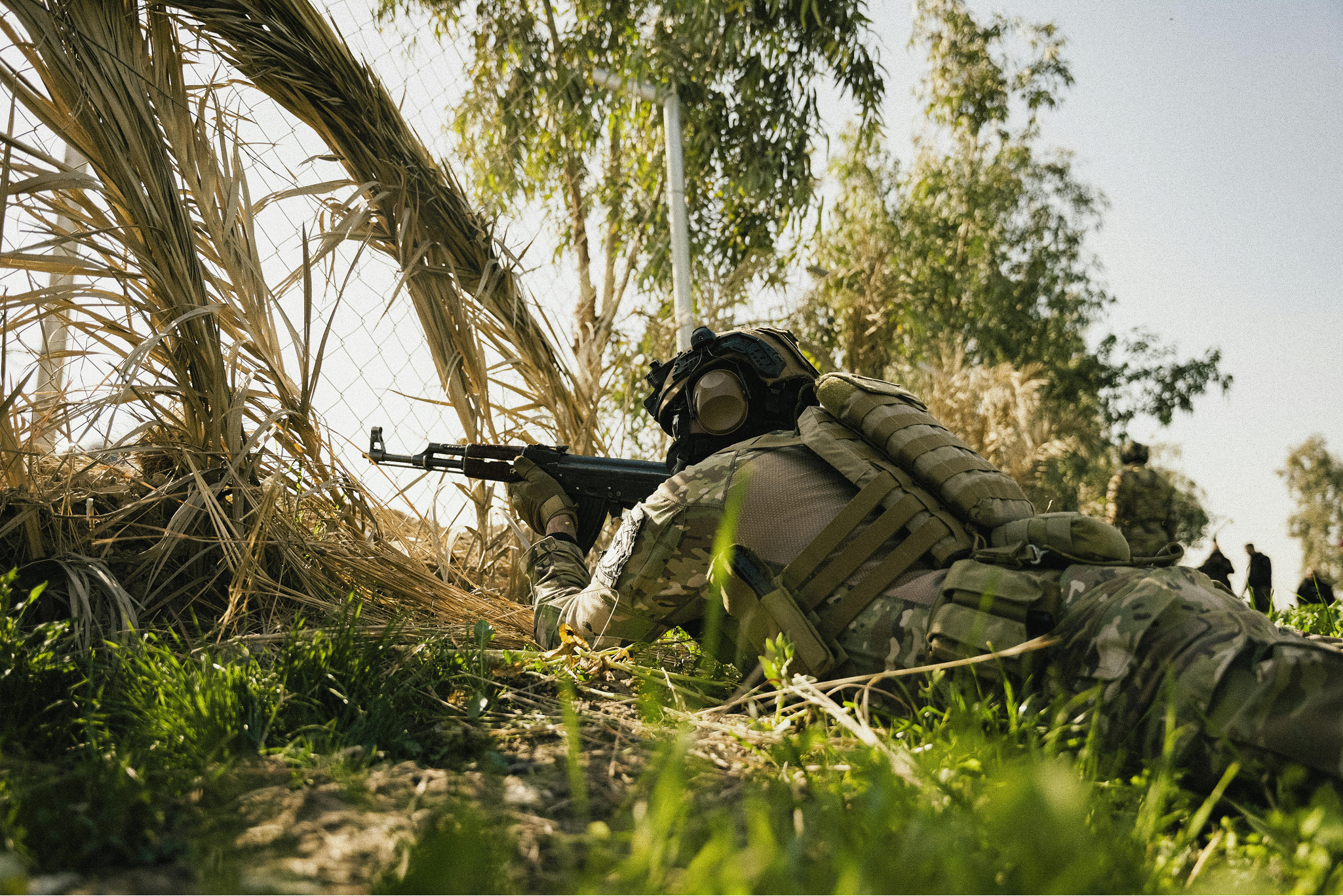
The United Kingdom has set a formal target for women to make up 30% of military recruits by 2030, while Canada has committed to 25% female representation by 2026 and is driving broader culture change through 30Forward. In the United States, the 30x30 Initiative is pushing for women to make up 30% of police recruit classes by 2030. These commitments are backed by recruitment programmes, outreach campaigns, and dedicated budget lines. They are not informal aspirations. They are policy commitments, and ones that reflect a growing recognition across allied nations that the under-representation of women in uniform is not just an equality issue, but an operational one.
None of them will be met if the retention problem is not solved. And one of the most significant, least discussed drivers of retention failure among servicewomen is equipment.
The Retention Gap No One Is Measuring
Most retention analysis in military and policing contexts focuses on the obvious factors: career progression, pay, working culture, family compatibility. These matter. But there is a category of retention driver that rarely appears in exit interviews or workforce surveys, because it is rarely asked about directly: the physical experience of the job.
Specifically, what it feels like to spend years doing physically demanding work in equipment that was not designed for your body.
The answer, for the majority of servicewomen currently serving, is that it is harder than it needs to be. Not harder in the sense of the training or the operational demands, those are chosen, understood, and frequently the reason women joined in the first place. Harder in the sense of a constant, physical penalty imposed by kit that compresses, chafes, restricts, and over time injures the body wearing it.
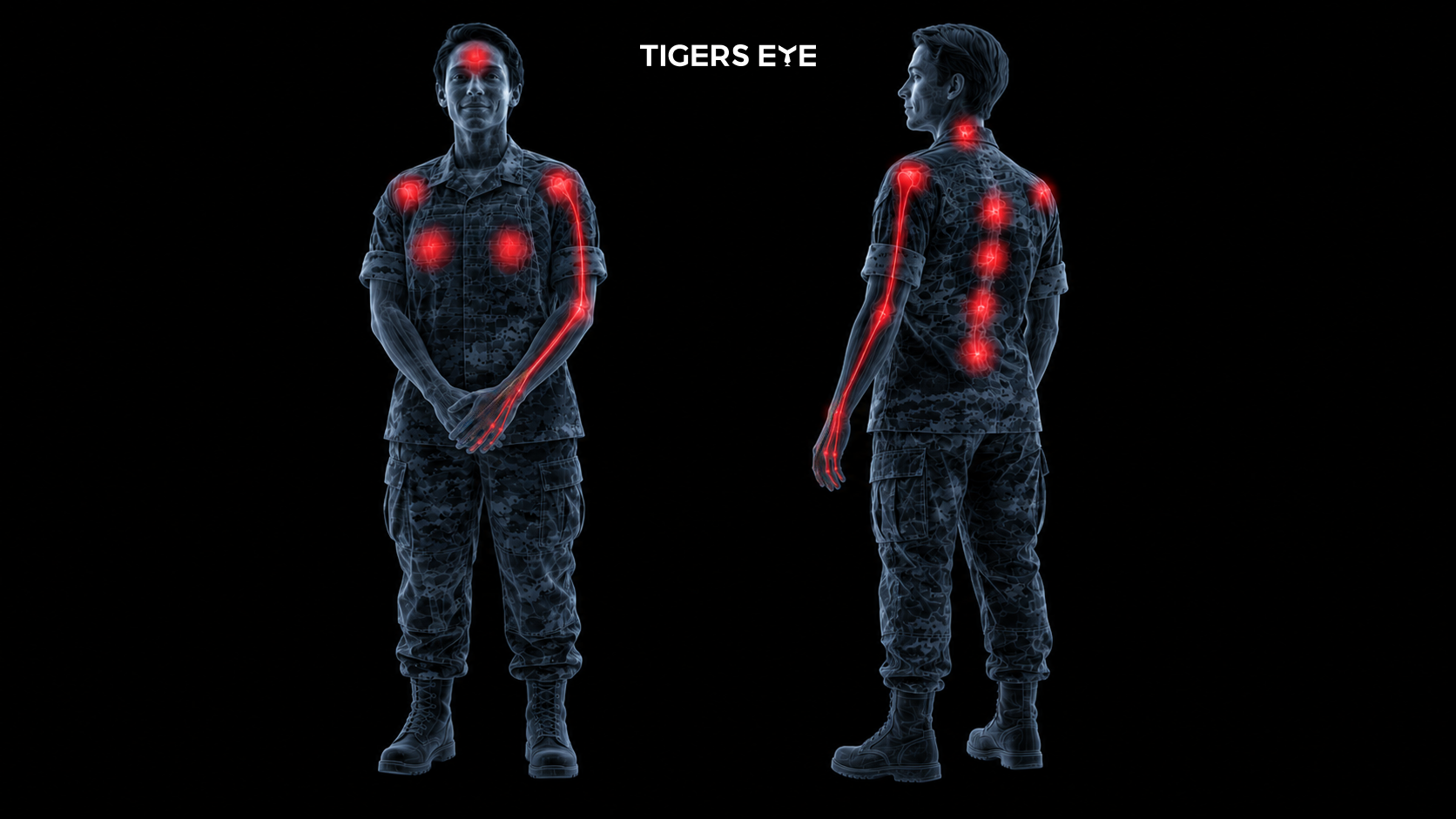
This penalty does not appear as a single incapacitating event in most cases. It accumulates. Over months and years, it translates into chronic musculoskeletal pain, breast tissue damage, nerve impingement, postural compensation, and the psychological toll of constantly adapting to equipment that signals, at a physical level, that your body was not considered when the kit was designed.
What the Data Shows
The evidence from Ukraine is the most granular available, because Ukraine's war has forced a level of scrutiny onto this issue that peacetime forces have not yet applied to themselves.
A 2025 survey of 64 active Ukrainian servicewomen found that 86% believe their command does not adequately consider their needs. One respondent summed up the financial and psychological cost with characteristic directness:
"Instead of being able to save money for the future, I often have to buy everything myself just to serve properly."
Servicewomen described feeling like "unwanted elements in the system". They described spending personal funds on uniform alterations, on civilian bras that could be worn under armour, on equipment that the supply chain should have provided but did not. They described the constant need to improvise and the erosion of motivation to stay in the service that comes with it.
This is the texture of retention failure. It does not look like a dramatic resignation. It looks like a gradual accumulation of evidence that the institution does not value the body you brought to it.
The Cost of Losing a Trained Servicewoman
The financial argument for retention is straightforward. Training a soldier from enlistment to operational readiness is expensive. US Army have spent $6 billion on recruiting and retaining military personnel between 2022-2025 alone (Baldor, 2025).
Every servicewoman who leaves because of preventable physical injury or chronic pain and discomfort caused by ill-fitting kit represents a direct financial loss to the force. The training investment walks out with her. And that's not even mentioning the medical and disability costs after they leave.
The operational argument is equally direct. In the current global security environment, every major NATO military is trying to expand its force. The UK is not meeting its recruitment targets. The US is struggling to maintain end-strength. Canada is in a similar position. In this context, retaining a trained, experienced servicewoman is not a welfare consideration, it is a force readiness priority.
The Norway Model: What Happens When You Get This Right
Norway opened all combat roles to women in the mid-1980s - earlier than almost any other NATO country. In 2014, it established the Jegertroppen, the world's first all-female special forces training programme. More than 300 women applied in the first intake, but only eleven were selected. The programme now produces approximately a dozen elite female graduates annually.
The Jegertroppen's success has not been attributed to lowered standards. The physical demands are the same for male and female candidates: full pack weight, 30km marches, 48 hours without sleep. The programme's trainers have noted publicly that female recruits frequently outperform male counterparts in specific areas, including precision shooting and tactical problem-solving.
What Norway got right was treating female integration as a design challenge rather than a policy concession. The question was not "how do we accommodate women?", but "how do we build a force that is optimised for all the people in it?" Equipment, training structures, and support systems were designed with female physiology in mind from the outset.
The result is a pipeline of elite female operators. The retention data on Norwegian servicewomen is not publicly granular, but the programme's continued existence and expansion speaks for itself.
What Needs to Change
The retention problem caused by ill-fitting kit is solvable. It requires three things:
1. Measurement before issue. A 2025 survey found that 86% of Ukrainian servicewomen were never measured before their kits were issued. This is the baseline failure. No equipment can fit correctly if the people designing the procurement system do not know the measurements of the people who will wear it.
2. Female-specific kit in the supply chain. Female-fit body armour exists. Female-specific uniforms exist. The Breast Support System (BSS) exists. The problem is not a lack of solutions; it is a procurement system that has not made those solutions standard issue.
3. Integration, not exception. Female-specific kit should not be something a servicewoman has to request, justify, or source herself. It should be the default. Just as male-standard kit is automatically issued to male service members, female-adjusted kit should be automatically issued to female service members.
None of these are radical proposals. They are logical extensions of a recruitment and retention strategy that has, until now, focused on attracting women to the force without fully reckoning with what it costs them to stay in it
The Bottom Line
The female participation targets are achievable. But they require accepting that recruitment and retention are not separate problems. You cannot retain someone you have not properly equipped.
Every year that procurement continues to issue male-standard kit to female service members is a year in which the gap between policy ambition and operational reality widens. The cost is paid by the servicewomen who stay, in physical terms. And by the forces that lose those who decide they cannot.
Share this blog:
Lessons from Ukraine
Ukrainian Female Military Units: Who They Are, What They Do, and What They Face