

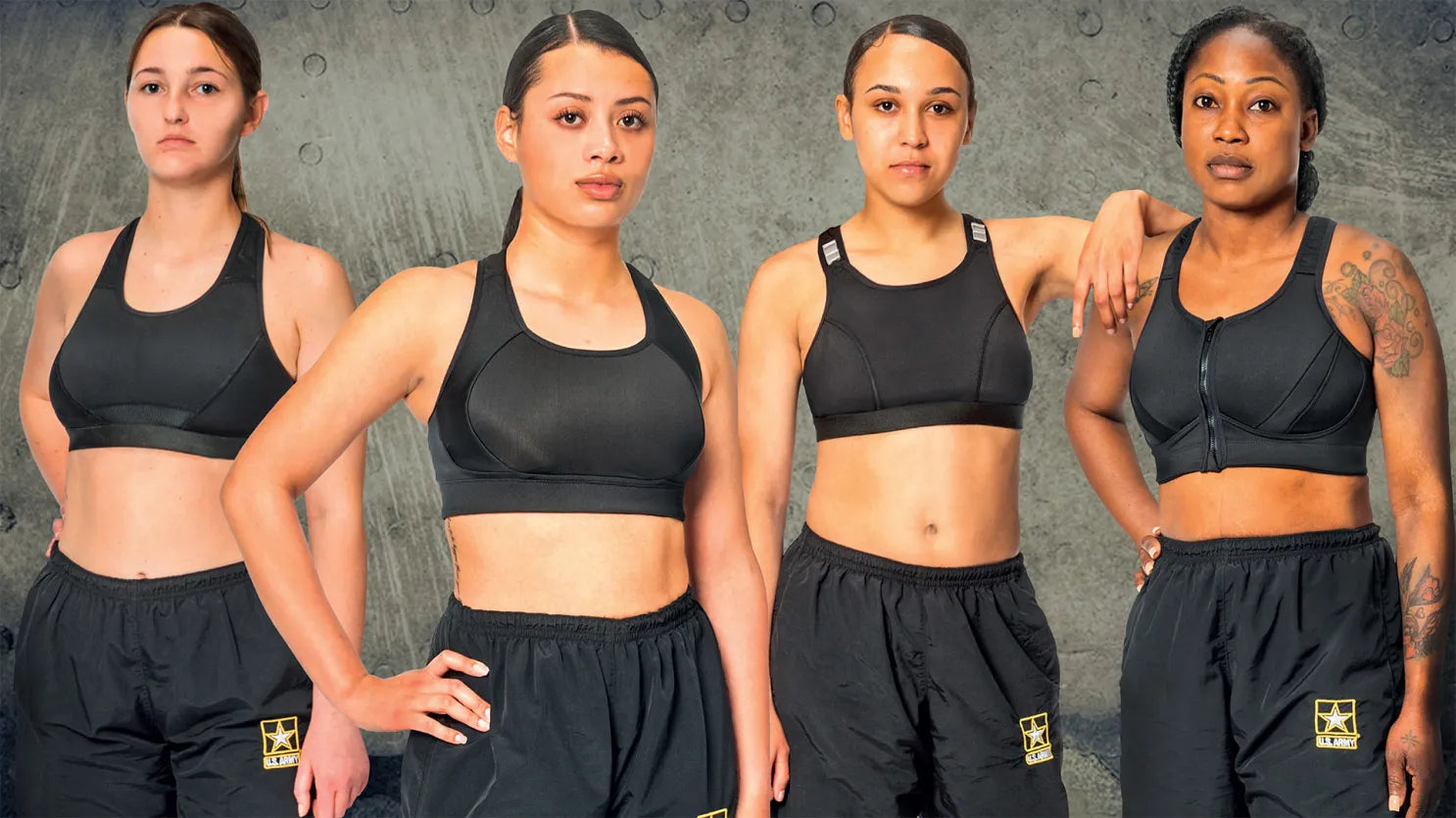
In 2019, the United States Army initiated a programme to develop the world's first military-specific bra for servicewomen. The programme was led by DEVCOM, the Combat Capabilities Development Command, and was, by any measure, a significant and long-overdue step. For the first time, a major military formally acknowledged that breast support was a functional equipment requirement, not a personal matter for individual service members to resolve in their own time.
Seven years later, the "Army Tactical Brassiere" is still not in full service.
In 2024, Tigers Eye launched the Breast Support System (BSS), which has been commercially available, clinically tested, and deployed in active combat by Ukrainian soldiers within a year of its release.
This is not a criticism of the Army Tactical Brassiere programme. It is a case study in why commercial innovation and government procurement exist on different timescales and why, in the gap between them, servicewomen have been left to manage without.
The ATB: What It Is and Where It Stands
The US Army's ATB programme was initiated by the Soldier Centre, a DEVCOM research facility in Natick, Massachusetts, that has been responsible for many of the most significant advances in US military equipment over the past several decades.
The problem the ATB was designed to solve was well-understood: female service members performing high-impact physical activity in standard combat kit had no purpose-designed breast support. Commercial sports bras were the default option, but they were not designed for the operational environment, for the specific combination of body armour weight, load carriage, and sustained wear that defines military service.
The ATB programme set out to change that. Researchers conducted anthropometric studies of female service members, developed prototype designs, and submitted them to testing. A first public prototype was revealed in 2022, generating significant media coverage and genuine optimism among servicewomen who had long been raising the issue.
In 2023, a "combat-ready" advancement was announced. As of 2026, the ATB remains without confirmed full uniform adoption or documented widespread issues. The programme has not been cancelled. It is, by all publicly available indications, still progressing. But it has not yet reached the servicewomen it was designed to serve.
Why Government R&D Moves Slowly
The reasons for this gap are structural rather than motivational. Military procurement operates within a framework of requirements setting, testing protocols, safety certification, contracting law, budget cycles, and political oversight that has no commercial equivalent. These constraints exist for good reasons; the consequences of issuing equipment that fails in the field are severe, and the accountability structures of public procurement are designed to prevent exactly that.
But those constraints have a cost. They mean that a development cycle which, in the commercial sector, might run from concept to market in two to three years can take a decade or more in military procurement. The ATB's timeline is not unusual. It reflects the system working as designed.
The problem is that servicewomen do not have the luxury of waiting for the system's timeline.
The BSS: A Different Path
Tigers Eye approached the same problem from a different direction.
Rather than working within the military procurement system, Tigers Eye built a product to the standard that system would require and validated it through the world's leading independent research institution.
The Breast Support System was developed in collaboration with the University of Portsmouth's Research Group in Breast Health, the global authority in breast biomechanics, led by Professor Joanna Wakefield-Scurr. The lab conducted rigorous biomechanical testing: 720 running-based trials, motion sensors tracking breast movement in three dimensions, and comparative testing against 60 competing products.
The result: 74% reduction in overall breast movement. Ranked number one in its test group for both support and comfort.
That testing gave the BSS independent scientific validation of a kind that is directly comparable to the standards applied in military procurement, without the procurement timeline.
The BSS was then field-tested by active-duty US Marines worldwide. In 2025, it was deployed in active combat by Ukrainian soldiers and combat medics operating on the frontline. By the time most government procurement programmes would be completing their first prototype review, the BSS had been tested in a war.
What Each Approach Offers
This is not an argument that commercial innovation is superior to government R&D. It is an argument that they serve different functions and should be used accordingly.
Government R&D programmes like the ATB are working toward something important: a bra that will eventually be standard issue across the world's largest military, procured at scale, integrated into kit specifications, and available to every female service member from day one of service. That outcome matters enormously. When it arrives, it will affect hundreds of thousands of women, given that the design will be successful.
Commercial innovation, embodied by the Tigers Eye’s BSS, offers something different: a solution available now, validated by independent science and real-world operational testing, that procurement teams can integrate into existing kit programmes without waiting for a government programme to complete its cycle.
These are not competing approaches. They are complementary ones. The question for procurement decision-makers is not which one to choose. It is how to use both, drawing on commercial innovation to close the current gap while government programmes work toward the long-term standard.
The Practical Implication
Every year that passes between the initiation of the ATB programme and its eventual full adoption is a year in which female service members are operating without purpose-designed breast support.
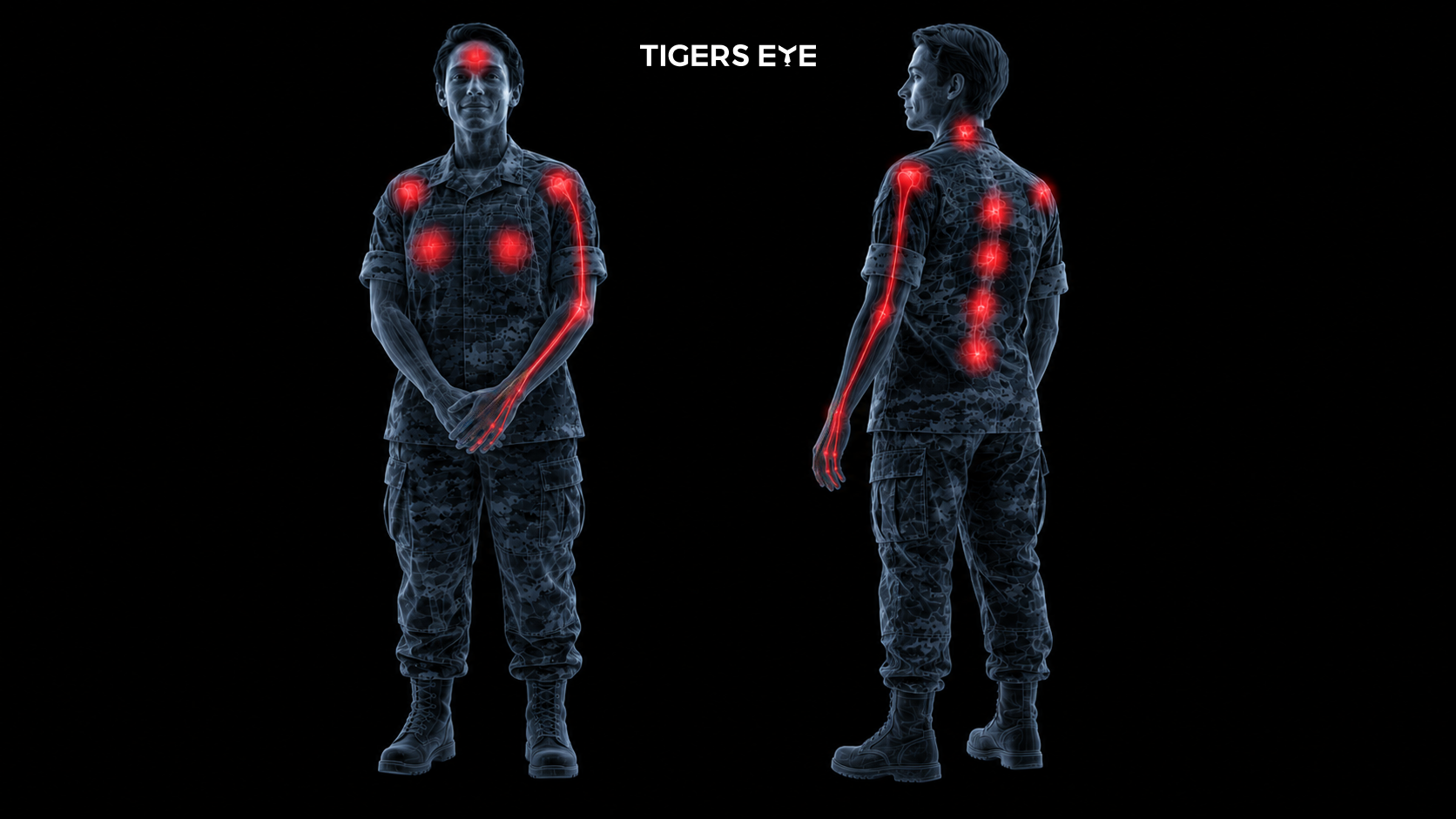
That gap has a measurable cost: higher injury rates, reduced PPE compliance, chronic pain, and the physiological disadvantage described elsewhere in detail. It is not an abstract gap. It is experienced by every servicewoman, in every shift, in every deployment.
The BSS exists. It is tested and available. And it can be integrated into body armour procurement as a paired component, the support layer beneath the plate carrier that makes the whole system work correctly on a female body.
The model is straightforward: when body armour is issued to a female service member, the BSS is issued alongside it. Not as an optional extra but as a standard kit. The same logic that applies to issuing the right boot size applies here.
The procurement infrastructure to do this exists. The product exists. The science exists. The operational evidence exists.
What is needed now is a decision.
Share this blog:
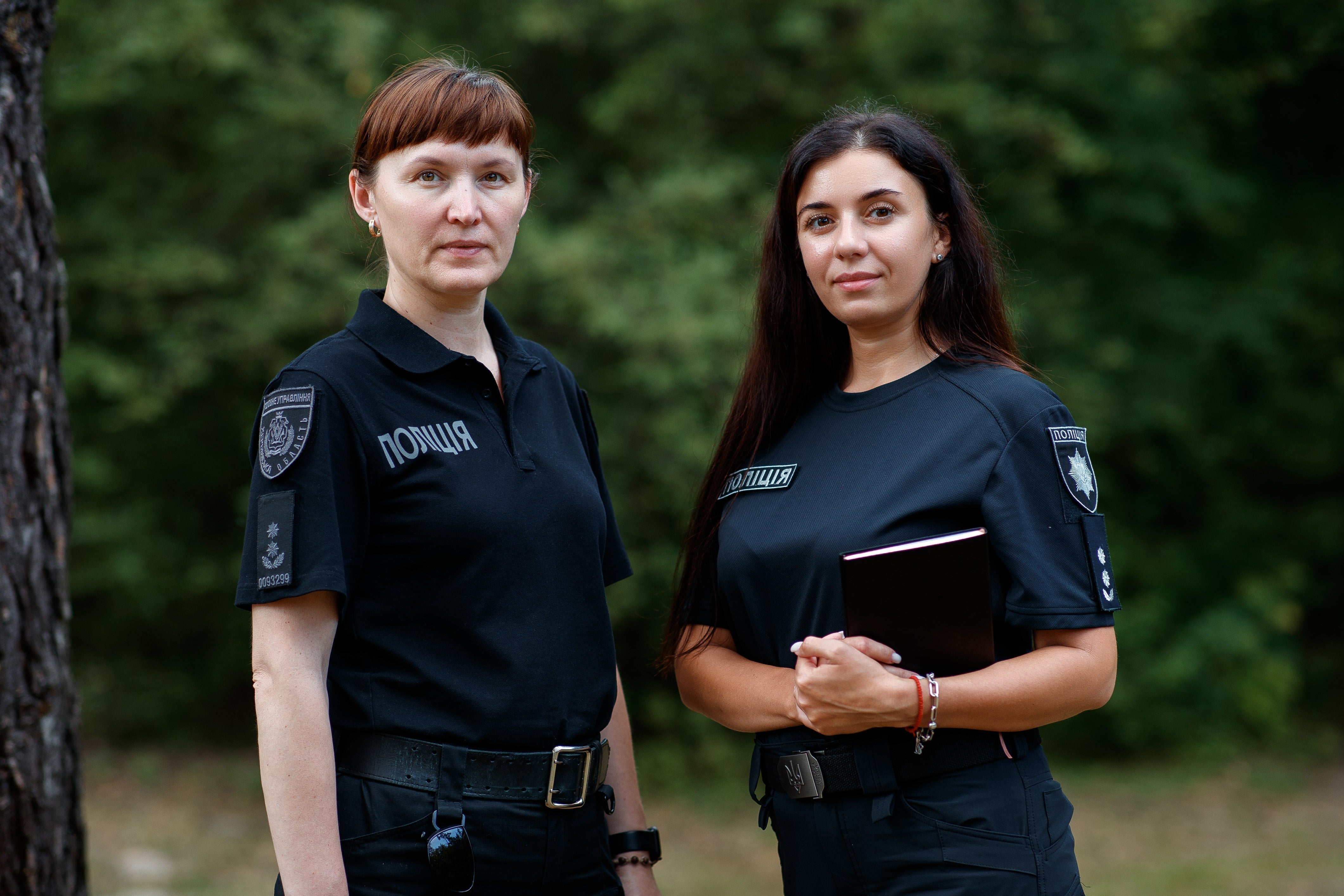
Ukrainian Policewomen: Serving Under Fire, Recognised on the World Stage
The $30.6 Million Question: What Breast Support Has to Do With Hip and Knee Injuries in Servicewomen