

As the military is historically a male-dominated field, women have been late to join officially, but never absent. Since Molly Pitcher took over her fallen husband's cannon in 1779 at the Battle of Monmouth, to women fighting in active combat on the Ukrainian front lines today, there have been many "firsts" for women in the military. Firsts worth celebrating, documenting, and frankly, interrogating. Because when you lay them out chronologically, one thing becomes clear: the policy has almost always run decades ahead of the equipment. Here is the timeline.

Before Official Enlistment: Unofficial Roles: 1770s
In the 1775–1783 American Revolutionary War, women served in support roles: wives, cooks, laundresses, seamstresses, nurses, and camp followers, mirroring patterns seen in the British military during the Crimean War in the 1850s. These were not recognised roles. There were no uniforms, no pay, no protection. Deborah Sampson is the notable exception: she fought disguised as a man and became one of the only women in history to earn a full military pension for participation in the Revolutionary Army.
First Legal Military Service: 1901
In 1901, the first official legal pathway opened for women to join the US Army via the Nurse Corps. Around 100 nurses enrolled initially. Sixteen years later, in 1917, Loretta Walsh became the first woman to legally enlist in the US military through the Navy Reserve. By the end of WWII, over 350,000 American women had served.
The UK followed a different path. Women served in officially recognised auxiliary military services during both World Wars, but were not fully integrated into the permanent armed forces until the National Service Act 1948. By mid-1943, 90% of single women and 80% of married women in the UK were working in the war effort, but in support roles, not official military capacity.
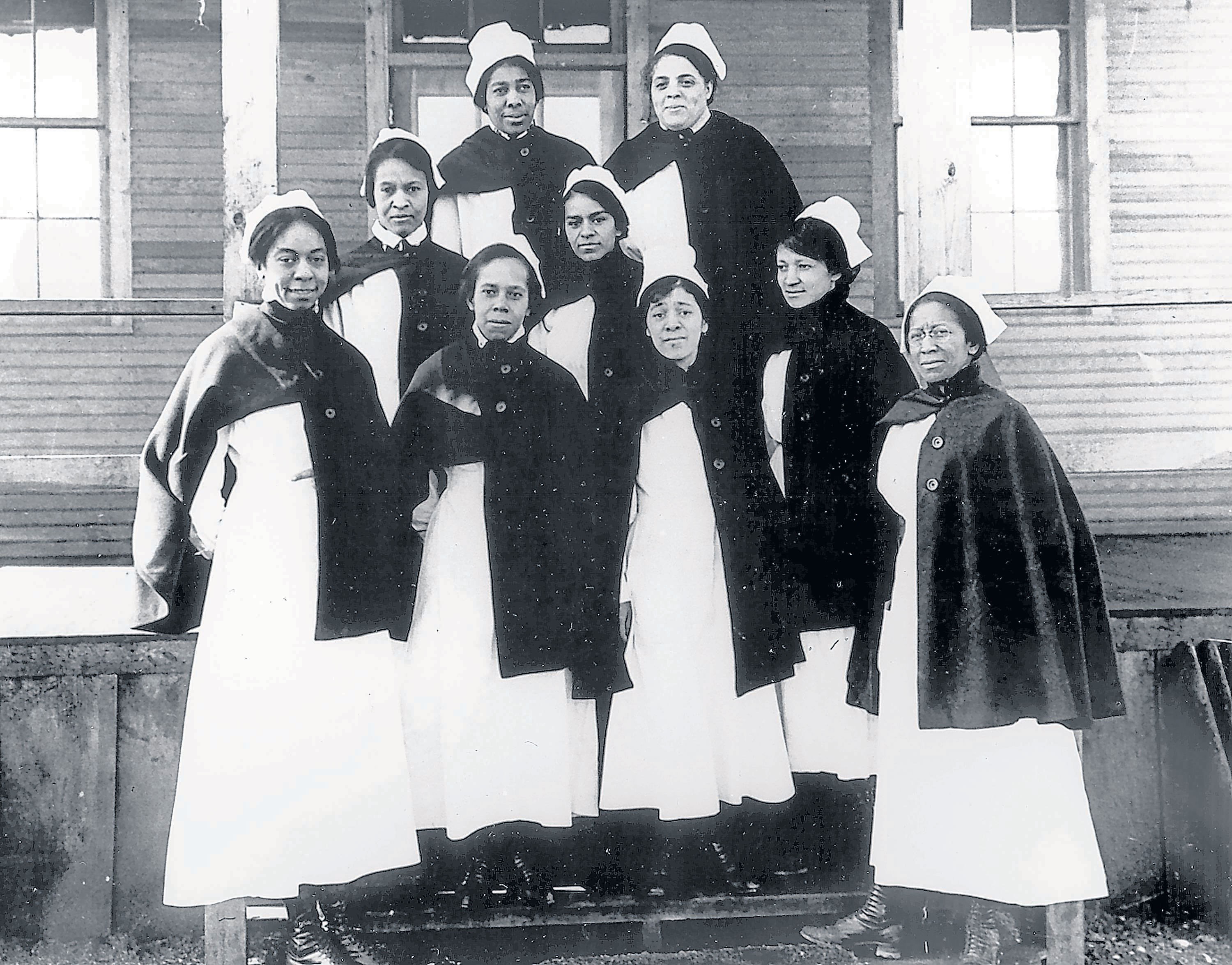
First Official Uniforms: 1917–1943
1917–1918: The United States provides women with feminised adaptations of male jackets paired with skirts.
1943: The US officially allows women to become full Army members, receiving standard-issue uniform. Around 150,000 women are estimated to have enlisted during World War Two.

First Uniform Designed for the Female Body: 1950
In 1950, the US Army employed fashion designer Hattie Carnegie to design the world's first Army uniform intentionally created for the female body. It was followed in 1956 by the first female-specific green service uniform, a landmark, 49 years after women first entered official military service. It took nearly half a century for the uniform to acknowledge the body wearing it.

The Very First Female Breast Protection: 1943
In 1943, an early breast-protective device called the Saf-t-Bra was introduced during World War Two, invented by Wilson Goggles. It was a hard plastic brassiere designed to prevent injuries to the breasts of female war workers. It was not designed for soldiers, and it was not designed for operational use. But it was an early acknowledgement that the female body required a different protective design.

First Women Deployed to Combat Zones: 1990–1991
Although women had been legally working within the US military for 90 years by this point, it was not until the Gulf War that women were first deployed into combat zones at scale. 41,000 American women and several thousand British women were deployed to Iraq and Kuwait.
1995: Captain Martha McSally became the first US woman to fly combat missions. In 2004, she became the first woman to command a fighter squadron. She later became a U.S. senator.

First Woman Leading Troops in Combat: 1989
In Panama, Captain Linda Bray led the 988th Military Police Company into battle, the first woman in US history to do so. The event triggered a Congressional debate about whether women should be permitted in the military at all. A bill was introduced to formally allow women in combat roles. It died after generals lobbied against it on grounds of physical capability. A decade and a half later, in 2013, the Pentagon finally lifted its prohibition on women in combat. Defence Secretary Leon Panetta acknowledged what many already knew: women had long been integral to military success. It began with Captain Linda Bray.

First Combat Roles Formally Opened: 1993–2018
1993: Aviation combat roles open to women in the United States.
2013: The US lifts the combat exclusion policy. All combat roles are to open by 2016. 2016: The United Kingdom announces the opening of ground close combat roles for women, with full implementation by 2018.
2018: Women become fully eligible for all British Army combat roles.
First Female Infantry Graduates: 2015–2019
2015: For the first time in US Army history, two women received the Ranger Tab, completing the toughest leadership and combat-skills course in the Army. 2017: A cohort of 18 women completed the first integrated infantry One Station Unit Training (OSUT), marking a historic step toward gender-integrated combat units. 2019 (UK): Chelsey Munday and Taylor Lewis become the first women in the British Army to complete the Infantry Soldier Course, earning the right to serve as infantry soldiers.

First All-Female Special Forces Training Programme: 2014
Norway established the world's first all-female special forces training unit, the Jegertroppen, in 2014. More than 300 women applied. Eleven were selected from the initial cohort of over 220 candidates. The programme now produces approximately a dozen graduates annually, providing a pipeline of elite female soldiers available for deployment at home and abroad. Captain Ole Vidar, the unit's lead trainer, noted that selection demands were uncompromising: full pack weight, no sleep for 48 hours, 30km marches. "Most of the time, they shoot better than the guys," said one male Norwegian special forces trainer who worked alongside the unit. Norway had permitted women in all combat roles since the mid-1980s, but none had made it into special forces until the Jegertroppen programme created the pathway. Today, 11% of Norwegian military personnel are women, compared to 10.2% in the UK and over 15% in the United States.

‘Hunter Troop’ women in action. (Photo: Norwegian Special Forces)
First Female-Specific Combat Uniform Redesign: 2009–2022
2009: The US begins major redesign of the first female-specific Army Combat Uniform (ACU), featuring a slimmer cut, higher-rise hips, shorter sleeves, and repositioned pockets. It entered limited field testing before gender-adjusted ACUs were adopted across the service.
2021–2022: The US introduces improved hot-weather combat uniforms for women, with sleeve, waist, and bust adjustments.
First Female-Specific Body Armour: 2019–2020
2019: The Female-Fit Improved Outer Tactical Vest (IOTV-F) enters limited initial issue to mixed-gender units for testing.
2020: The Female Plate Carrier (PC-F) and the updated Female-Fit IOTV are rolled out to all requesting units, becoming the first fully-scaled, gender-adjusted plate-carrier systems in the US Army.

First Official Military Bra: 2019–2024
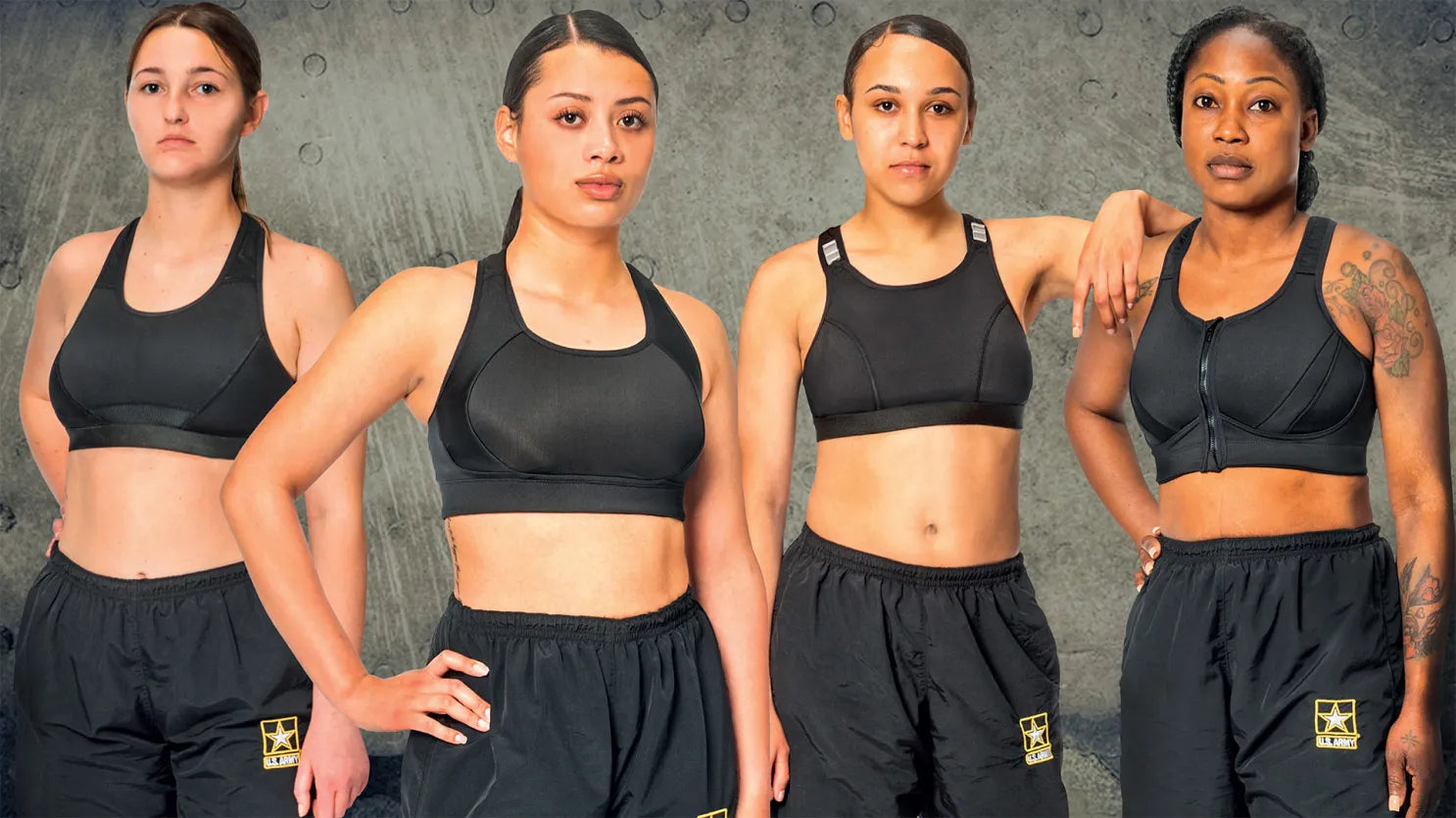
2019: The US Army initiates the formal Army Tactical Brassiere (ATB) programme, led by DEVCOM. A first public prototype was revealed in 2022. By 2023, a "combat-ready" advancement was announced. As of 2026, it remains without full uniform adoption or confirmed widespread issue.

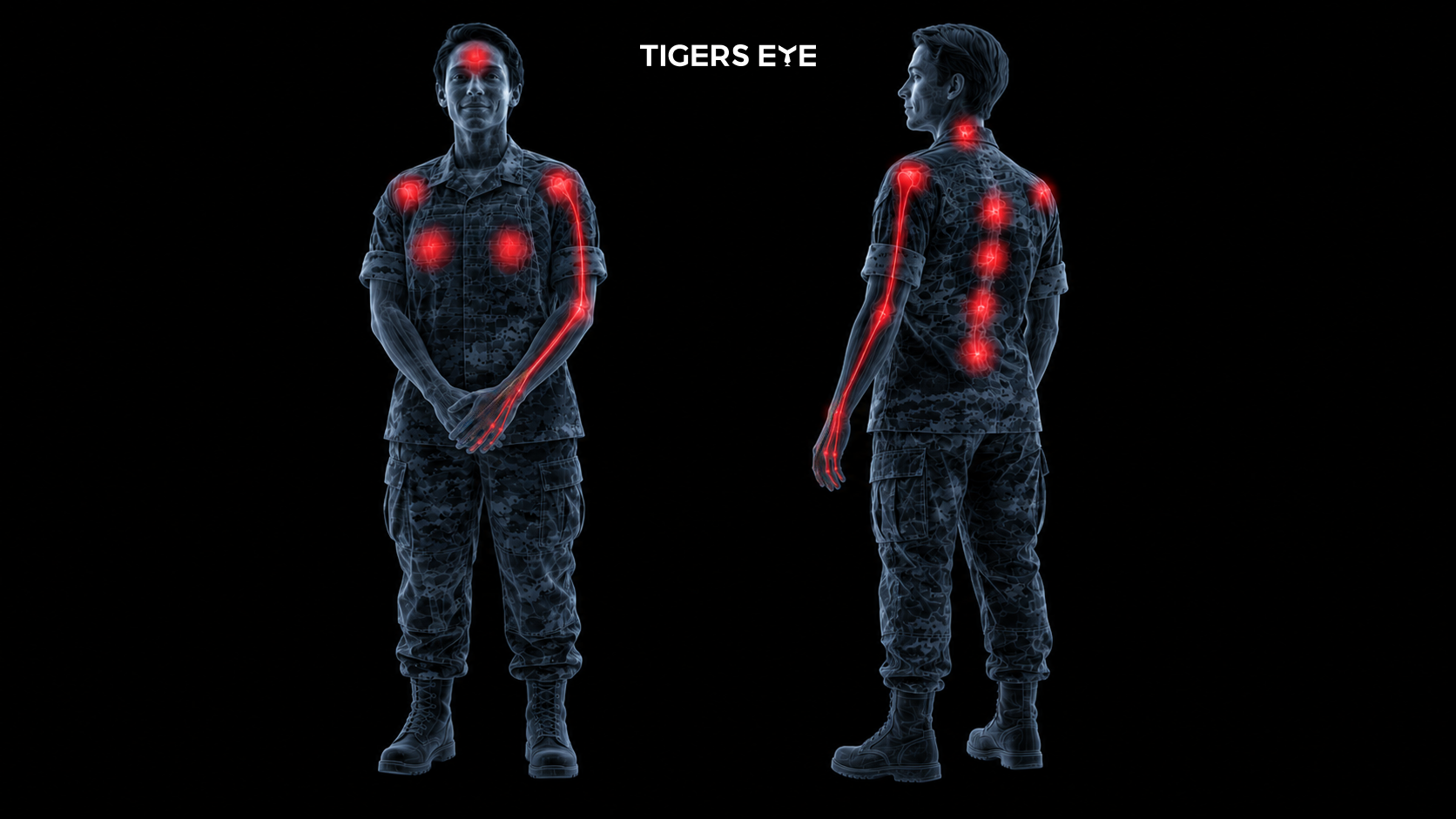
2024: Critical Services (formerly Tigers Eye) launches the world's first commercially available Breast Support System (BSS) built specifically to be worn under body armour as part of a servicewoman's operational kit. Biomechanics testing at the University of Portsmouth's Research Group in Breast Health, the world's leading breast science laboratory, confirmed 74% reduction in breast movement, ranking it first in its test group of 60 competitors across 720 lab trials.

The BSS was subsequently field-tested by active-duty US Marines worldwide, and, in 2025, was deployed by Ukrainian soldiers and combat medics operating in active war. It is, arguably, the first piece of breast-specific equipment designed not as fitness apparel or a training aid, but as a functional component of the operational equipment ecosystem, engineered for body armour integration, load carriage, and extended wear.

Lessons from Ukraine
Ukraine's war since 2022 has become one of the most important case studies in modern military history for the integration of women in combat, and for the consequences of failing to equip them properly.
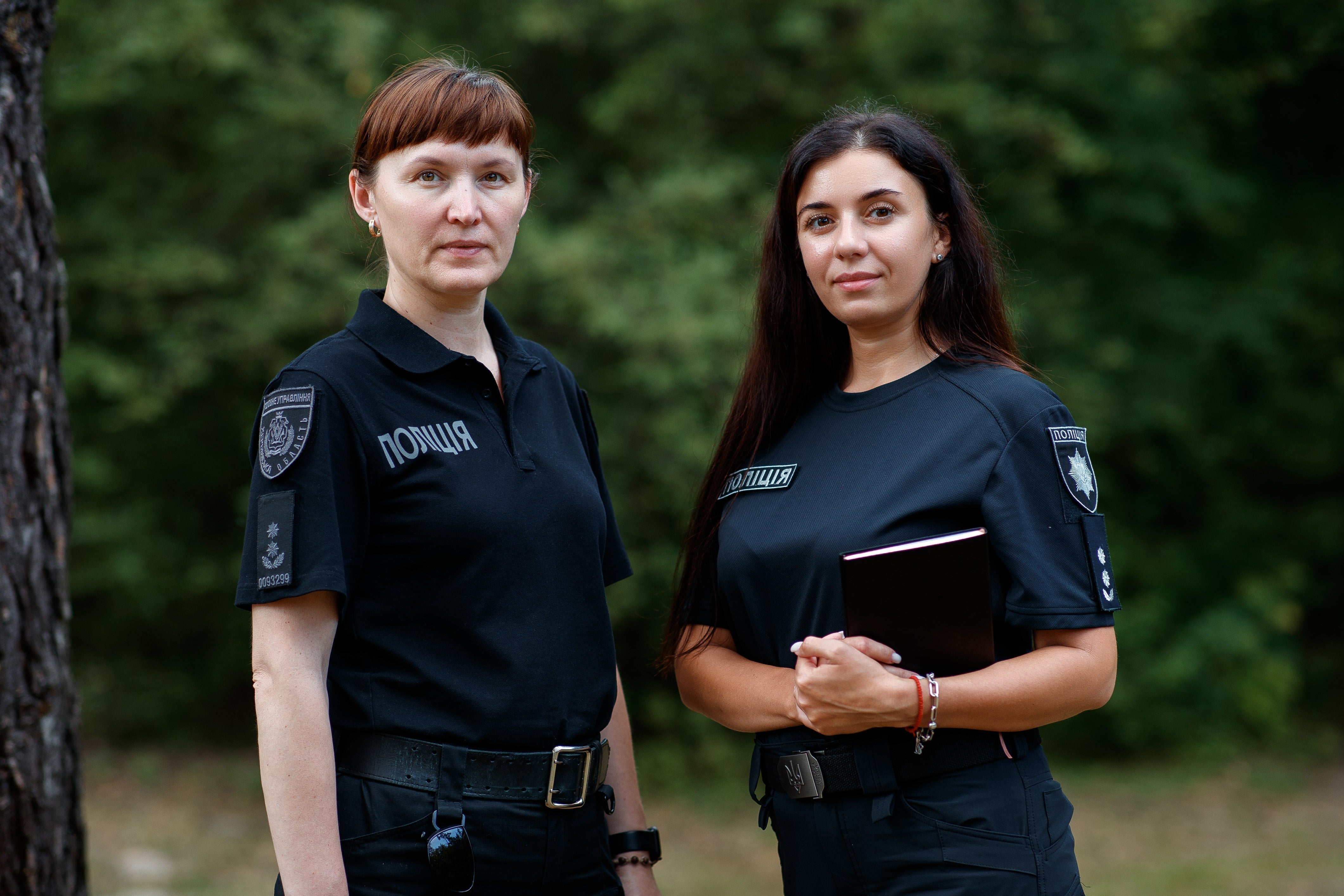
By January 2024, over 66,900 women were serving in the Ukrainian Armed Forces, with more than 5,000 deployed on the front line. Female participation rose approximately 40% between 2022 and 2024. Women hold thousands of leadership positions and operate across combat, medical, and intelligence specialisations. Yet the supply chain did not move with them.
A 2024 survey of active Ukrainian servicewomen found that 86% were never measured before kit was issued, 70% received body armour that did not fit, and 42% received no women-specific underwear from the state at all. Standard body armour, weighing approximately 10.5kg per set, was engineered for a male torso. On a woman, it presses directly onto the chest, restricting breathing, compressing breast tissue, limiting range of motion, and increasing fatigue during prolonged operations.
The consequences have been documented and, in some cases, medically proven. Natalia Lishchyshena became the first servicewoman in Ukraine to officially establish a legal link between standard-issue male body armour and a service-related breast disease - intraductal papilloma - which required a full mastectomy. Oleksandra developed a hematoma in her left breast, also caused by armour. Others describe simply enduring pain, spending personal funds on alterations, or adapting to kit that was never designed for them at all.
Two women-specific armour prototypes were certified by the Ukrainian Ministry of Defence in early 2024. Neither has entered central procurement. Over 150,000 male-standard sets were purchased in the first ten months of 2024 alone. The Ukrainian case does not represent failure. It represents the true cost of a procurement system that moved slower than the women it was supposed to serve.

The Equipment Gap That Still Exists
Even in military forces with the most advanced gender integration policies, the equipment gap persists: Body armour fit: Even the newest US Female-Fit IOTV leaves gaps at the waist and generates shoulder-strap chafing under load, increasing injury risk during sustained operations.
Breast protection
The US Army's ATB prototype (2022) remains in limited development. Most servicewomen rely on commercial sports bras not designed for operational conditions or load carriage. Uniform sizing: Hot-weather and cold-weather kits are frequently sized to average male measurements, requiring women to tailor or layer ill-fitting clothing.
Procurement cycles
Centralised procurement continues to default to "one-size" solutions, slowing the adoption of gender-adjusted gear even when it exists. The result is consistent and avoidable: women operate with equipment that was not designed for their bodies, incurring higher injury rates, reduced mobility, and lower operational endurance
So what?
Women have been serving, officially and unofficially, for 250 years. They have been legally eligible for all combat roles in both the US and UK for just over a decade. The commitment to increase female participation is now formal policy: the US and Canada have pledged 30% female representation by 2030; the UK has set the same target.
But targets mean nothing if the supply chain doesn't follow. Women are not the capability gap in modern militaries. Inadequate equipment is.
After more than two centuries of firsts, first nurse, first enlistee, first combat pilot, first infantry graduate, first special forces operator - the final frontier is not policy. It is the equipment on her body when she goes to work. Properly designed, properly fitted, operationally tested gear is not a welfare concession. It is a prerequisite for a combat-ready force.
The next step is straightforward
The BSS is not a replacement for female-specific armour. It is the missing layer that makes the armour system function properly on a female body, reducing the physiological cost that standard kit currently imposes on every servicewoman who puts it on.
Integrate the BSS into standard issue alongside body armour. Pair the two, build it into procurement from the outset rather than leaving women to source their own trial and error solution. If you are in procurement, force design, or tactical equipment development and you want to understand what that integration looks like, we want to speak with you. Contact our team today.
Share this blog:
Taira: From Russian Captive to National Hero - The Combat Medic Who Saved War Victims
Lessons from Ukraine