

The Armed Forces of Ukraine (AFU) have expanded dramatically since the war began. By January 2024, the service counted roughly 66, 900 women, 47, 200 of whom are active service members and more than five thousand are deployed on the frontline.
Female participation has risen by about 40 % since 2022, and women now hold thousands of leadership positions. Despite this rapid integration, the logistical system that equips every soldier remains largely built around the male body, creating a gap that hampers effectiveness, safety and readiness.

A System Designed for Someone Else
For decades the AFU’s supply chain was oriented toward men. The only “women’s” uniforms that existed before 2022 were ceremonial items such as skirts and even high‑heeled shoes for parades, a practice that persisted until public criticism forced a change in 2021. Legislation in 2016 and again in 2018 opened virtually all combat specialties to women, yet the equipment they receive has not kept pace. When the full‑scale invasion erupted in 2022, women were issued the same Standard Combat Kit (SCK) as men, a collection of 46 items ranging from field uniforms and footwear to personal protective equipment, without any adjustment for female anatomy or body dimensions.

The Reality on the Ground
A survey of 64 active servicewomen and six in‑depth interviews conducted in 2024 reveals how pervasive the problem of uniform has become.
86 % of respondents reported that they were never measured for body, head or foot dimensions before being issued their kit
70 % said the body armour they received did not fit properly. This is consistent with the stories of Ukrainian frontline services that we are speaking to. See Daria's story, here - a 38kg soldier who was issued men's size 44 trousers that were hanging off of her body.

56 % rated the quality of that armour as low or very low
90 % received a summer uniform, yet roughly 66 % of those women found the sizes unsuitable
42 % received no women‑specific underwear from the state at all
Of the women who were issued underwear, only 10.8 % obtained the correct size
86 % believe the Logistics Forces Command does not adequately consider the needs of servicewomen
These figures show a daily struggle with gear that does not accommodate female bodies, that not only affects their direct ability to serve to the best of their ability, but also affects their health. An example of this is Oleksandra's story - a servicewomen who developed a hematoma as a result of male kit. Unfortunately these stories are common, and servicewomen are putting up with bad equipment or rely on their own funds for alterations, just to be able to serve.
Body Armour: A Critical Failure
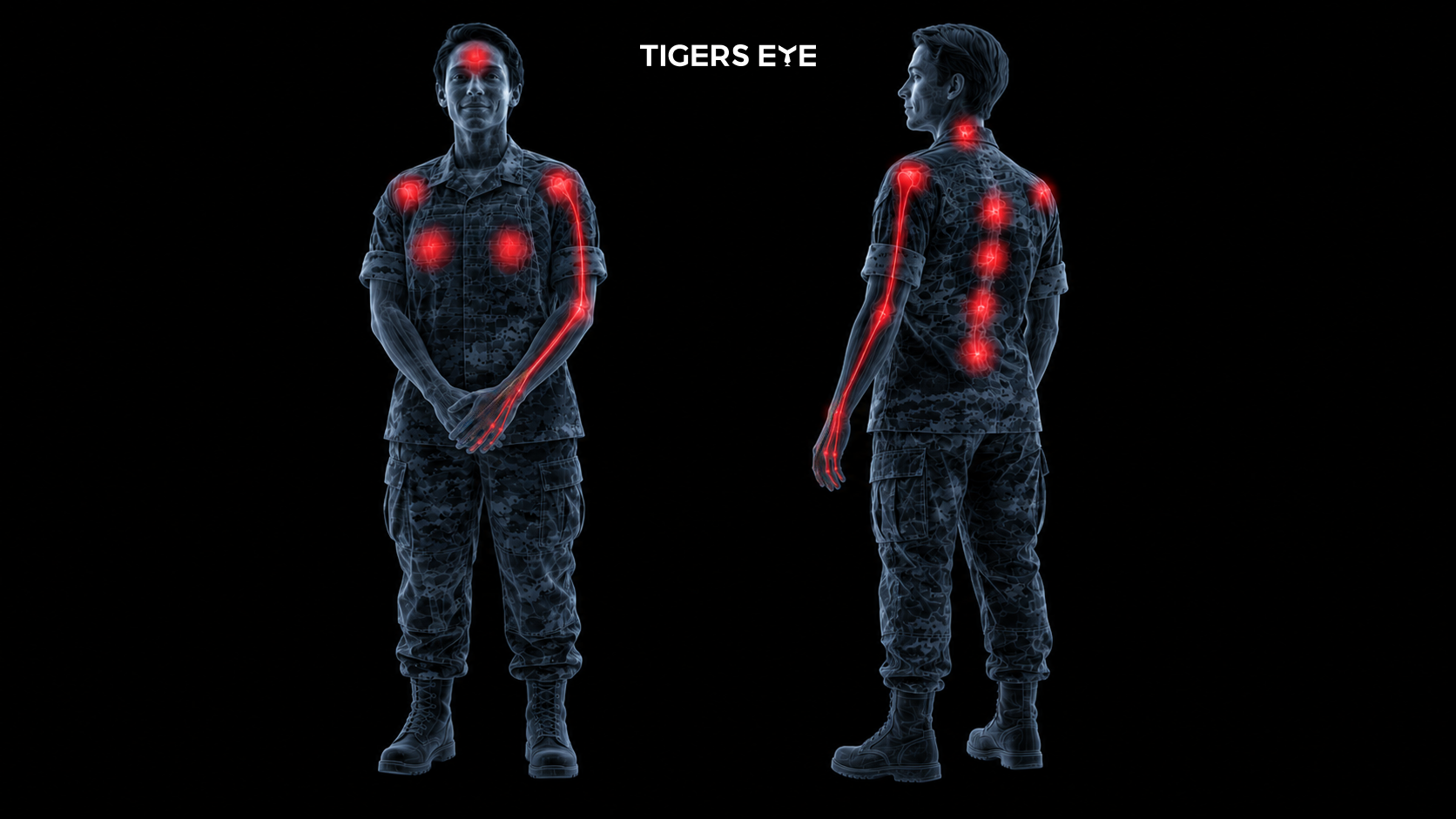
Standard body armour in the AFU weighs roughly 10.5 kg per set and was engineered for a male torso. When worn by women, the weight presses directly on the chest, crushing breasts, restricting breathing, limiting range of motion and increasing fatigue during prolonged operations. The result is reduced endurance, slower reaction times and a higher risk of injury.
Although two women‑specific armour prototypes were certified by the Ministry of Defence in early 2024, they have not entered central procurement. Instead, more than 150 000 male‑standard armour sets were purchased in the first ten months of 2024, meaning the majority of servicewomen continue to use equipment that was never designed for them.
Read Natalia's story, a soldier who lost her breasts due to a standard-issue bulletproof vest and became the first woman in Ukraine to officially prove a link between a service-related injury and a medical condition.
The Overlooked Layer: Proper Breast Support
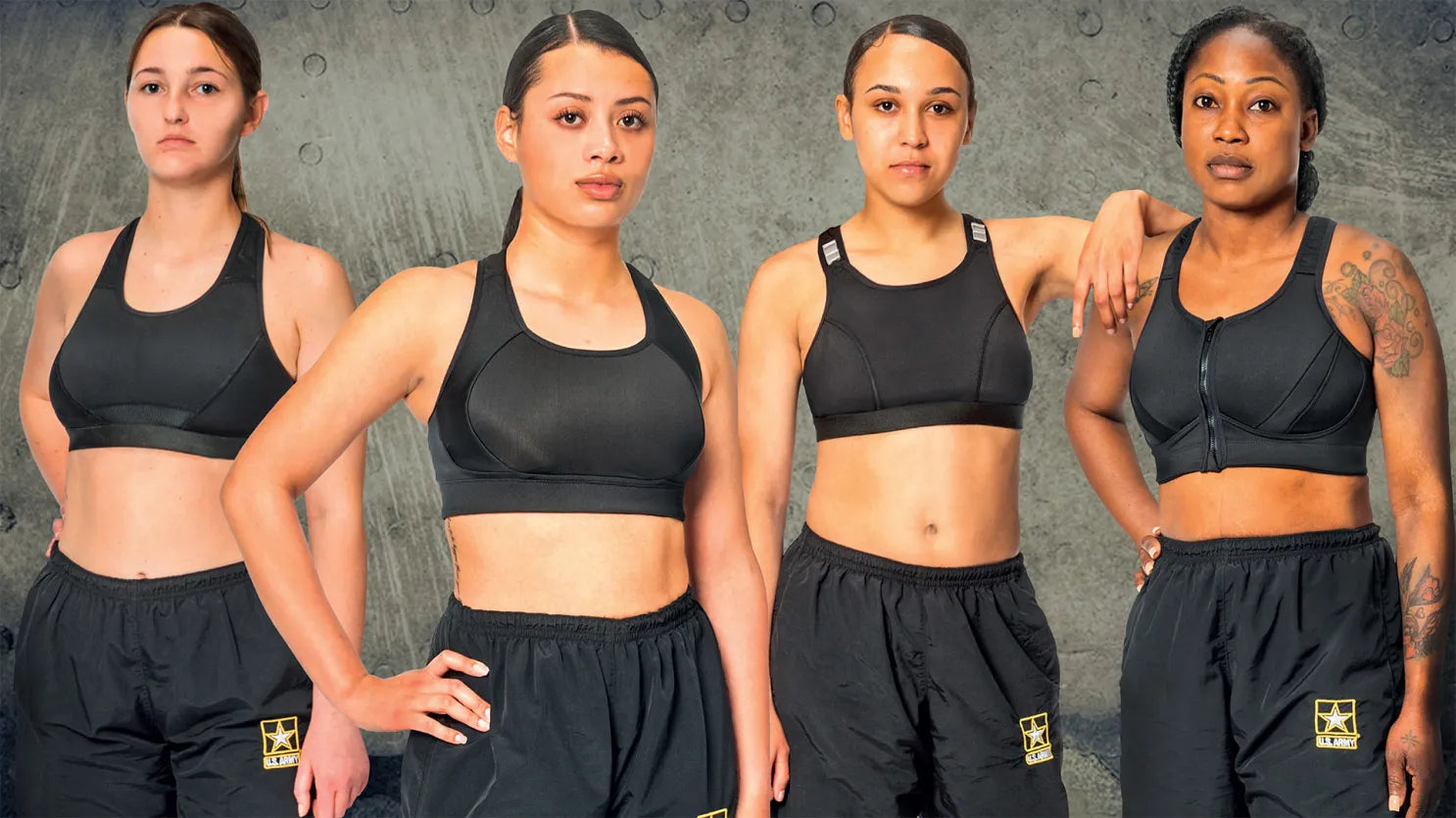
Women’s tops and bras were approved for provision in 2023, with a size range that stops at a bust measurement of 104 cm (XL). Ukrainian women often have bust sizes that exceeds this limit, leaving a substantial portion of the force out of options. In 2024 the Ministry of Defence procured 100 000 sets of women’s tops and briefs (underwear) enough to meet the official requirement of two sets per servicewoman, but only 15,000 of those units were the largest size (XL), 15 % of the total. Consequently, many women receive bras that are too small, causing fabric to bunch under body armour, leading to chafing, heat buildup and reduced mobility.
In The Fit to Defend report, bras are called “tops”, further highlighting the lack of breast support education in the services.
Uniforms That Work Against the Body
Uniforms cut to male patterns create additional problems. Shirts that are too long or too wide create excess fabric beneath armour, while pants sized for larger male hips leave gaps that hinder movement. Socks sized for bigger male feet often prove too large for women’s feet, resulting in blisters and discomfort during long marches. Because the supply system does not differentiate winter uniforms and thermal underwear by sex, women frequently have to purchase civilian alternatives or pay tailors to alter issued items.
Hygiene: A Hidden Operational Risk
Menstrual items such as pads, tampons and toilet paper are not procured through centralised purchasing. In remote field deployments this omission forces women to rely on volunteer organisations or to spend their own money on basic sanitary supplies. The lack of reliable access to hygiene products not only jeopardises health but also undermines morale and unit cohesion.
The Human Impact
The material shortcomings translate into a tangible human cost. Servicewomen describe feeling like “unwanted elements in this system” and cite financial strain from having to buy or tailor their own equipment.
One respondent explained, “Instead of being able to save some money for the future, I often have to buy everything here just to serve properly.”
Physical discomfort from ill‑fitting gear limits basic movements, reduces combat readiness and increases the risk of injury. Psychologically, the constant need to improvise erodes confidence and can be demotivating, especially when 86 % of surveyed women believe the Logistics Forces Command does not adequately consider their needs.
Progress… But Not Yet Delivery
In 2023 the Ministry of Defence approved women’s underwear and began centralised procurement of women‑specific uniforms and underwear. Two female‑specific body‑armour designs were certified in early 2024, and testing of winter uniforms and thermal gear commenced later that year. Despite these policy advances, the items have not been widely procured or issued. The majority of armour and uniform purchases in 2024 continued to be male‑standard models, and the limited size range of approved underwear still excludes a significant segment of the female force.
One respondent mentioned the introduction of women's military uniforms in 2024 but highlighted the issue with their availability:
"they get snapped up very quickly, and there aren't enough for all the women"
A telling comment from one of the servicewomen states that "...the general army system and sexism in particular create barriers in the minds of leadership", which points to the systemic nature of the problem and its entrenchment in organisational culture.
Core Issues & Why This Matters
The core problem is a supply chain that assumes a one‑size‑fits‑all male body. Because women now constitute roughly 15 % of the AFU and occupy front‑line and leadership roles, the mismatch directly reduces operational effectiveness. Ill‑fitting armour and clothing increase fatigue, limit mobility, raise injury risk and force soldiers to allocate personal funds to acquire suitable gear. The resulting financial and psychological burdens threaten retention and undermine the principle of equal opportunity that the legislation sought to achieve.
Bottom Line
Women in the Ukrainian Armed Forces are fighting a war on two fronts: the enemy outside and an equipment system built for men on the inside. Until the logistical chain expands size ranges, specialises kit for women’s bodies, accelerates procurement of women‑specific body armour and ensures that every soldier is measured before issue, the force will continue to shoulder an unnecessary extra cost in both material and human terms. Addressing these gaps will enhance combat performance, protect health and reaffirm the commitment to truly equal service for all national defenders.
Share this blog:
This soldier had her breasts amputated due to body armour designed for men’s bodies: the consequences of ignoring female anatomy in the services
Taira: From Russian Captive to National Hero - The Combat Medic Who Saved War Victims