

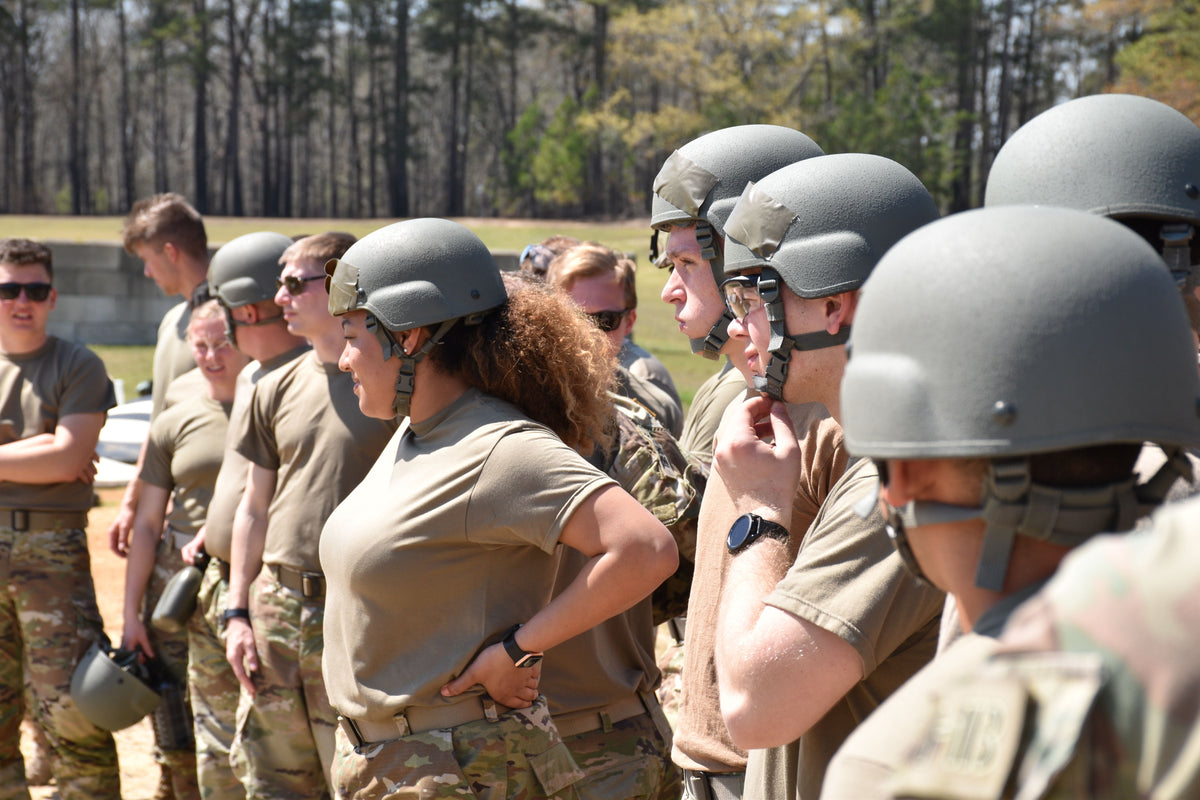
In previous blogs, we have discussed at length why breast support is crucial for women in the military and the critical services, including the Fire Service, Police, Ambulance Service, Rescue, etc. This blog, in particular, pieces together existing research to show exactly how the lack of breast support can cause injuries, affect performance and have huge financial consequences.
After establishing that servicewomen need breast support, the next logical step would be putting these women in sports bras. And that’s exactly what has been happening across the services. Oscar Kilo, the National Wellbeing Service for the UK Police, has dedicated educational webpages all about sports bras. Similarly, the UK Armed Forces has launched a fit & issue sports bra programme for Basic Training (BT) recruits and incorporated a claim-back scheme towards sports bra expenses post-BT, allowing Army members to claim £50 back per year for sports bras, and £100 per year in the Royal Navy.
While we acknowledge that this recognition is indeed a step in the right direction, it's time for someone to step up and say what the research is showing so clearly: sports bras are simply not enough for servicewomen.
The Research
Research into the British Army's sports bra fit & issue service found problems even with professionally fitted sports bras. The share reporting at least one issue rose from 79% before Basic Training to 88% during it, and rubbing/chafing was the second most common complaint (70%) throughout (Burbage et al., 2021). A larger follow-up study recorded 142 separate issues with issued sports bras, with 60% of recruits reporting at least one problem (Paines et al., 2025).
Why has this happened? By design, sports bras are created for sport; not to be worn under heavy kit, not to counter pressure, not to be worn on 14+ hour shifts or on deployment, and definitely not to maximise performance and safety in those crucial life or death moments that servicewomen so often operate within. And while before there weren’t any other options rather than sports bras, now there is a choice; we made sure of that.
But before we get into the solution we created, let’s talk about exactly why sports bras are simply not sufficient for servicewomen.
Are servicewomen athletes?
This is the question everybody needs to be asking themselves. Good sports bras are created to maximise athletes’ performance, and servicewomen must train to stay fit as part of their job – but is sport all they do?
Of course not. Servicewomen also wear 5-20kg of protective equipment and kit; they often work long shifts, sleep without the luxury of getting out of their uniform, and the operational reality of saving lives, where every second counts.

Weight & Pressure
Let’s break down the statement above, starting with how sports bras distribute weight and pressure. The short answer to this is... they do not – and that creates a serious problem.
Provided a sports bra is designed properly, with the right features, it can distribute the weight of the breasts; but when adding 12kg body armour on top of that, a further issue arises – one that sports bras are actually making worse.
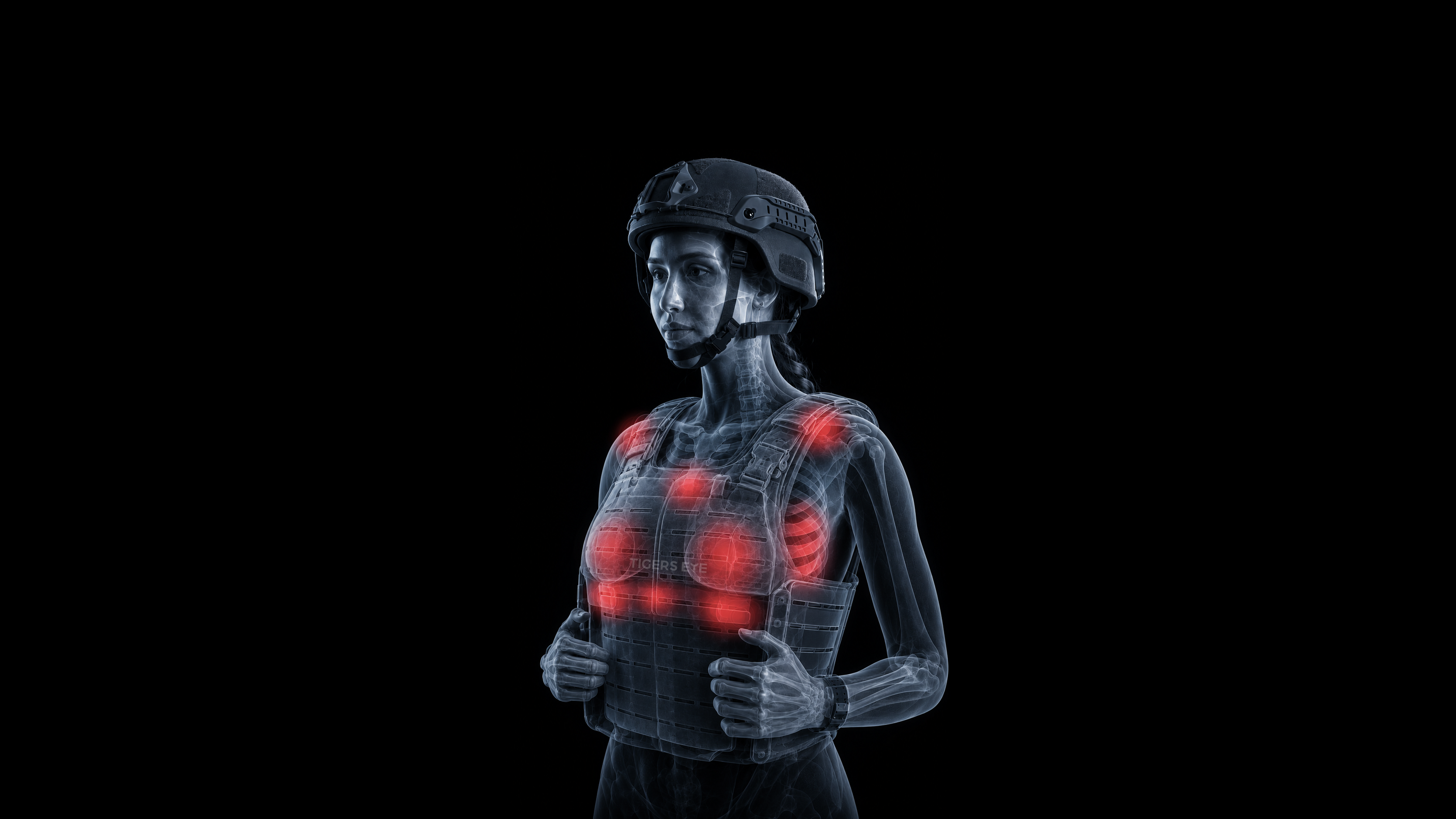
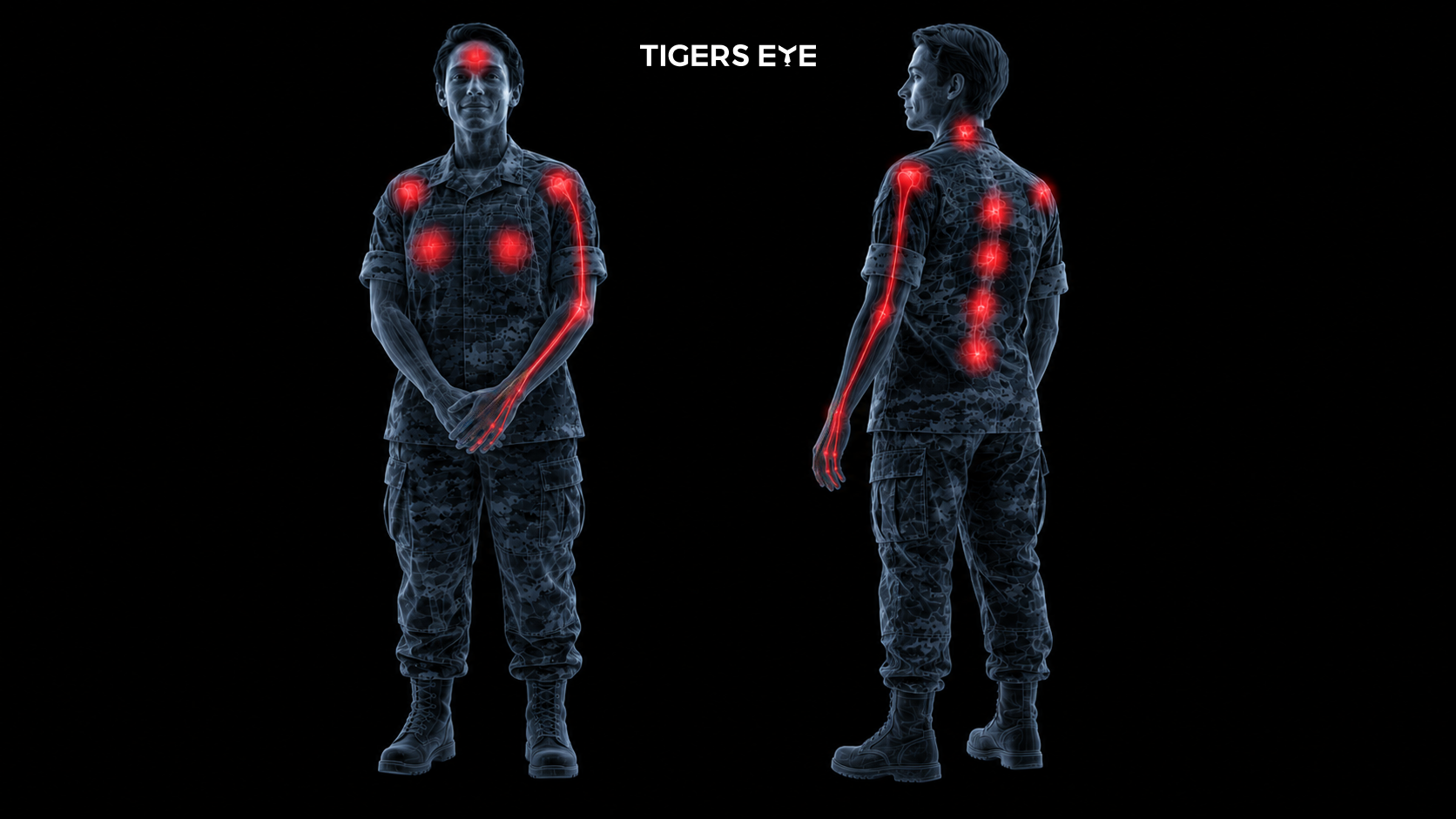
Since the standard-issue kit is not moulded for the female shape – in other words, there’s no place for the breasts to go – the weight of the armour can literally crush them, causing a range of problems such as tissue changes that look like cancer, which we talk about in this blog. A National Police Uniform and Equipment Survey (De Camargo et al., 2025) found that "crushed breasts" is the most common health problem experienced by female police officers (38%): “The stab vest doesn’t incorporate breasts, pressing on my chest and making it hard to breathe”.
But unfortunately, the problems don't stop there. The straps of the body armour also overlap the sports bra straps, which sit on top of the shoulder nerves, causing nerve damage, resulting in migraines and numb fingertips (which we also cover in our previous blog). See our short explanation video here.
Long wearability
Even with top sports bras, we often hear athletes and long-distance runners complain of chafing; so badly that it’s common in the running community to cover the nipples and lather themselves up in anti-chafe cream so they are not bleeding and blistering all over their chest by the end of the race. Some of these races can last even 8 hours; that’s a normal – dare we say even short – shift for a service member. Chafing can happen for two reasons: one is friction from fabric and skin moving against each other, and the other is sweating and the inability of the fabric to wick moisture effectively, which then harbours bacteria and can create a range of skin irritations, skin breakouts, even infections. For a sportsperson, this can be an inconvenient but expected outcome. The difference is, at the end of the 5-8 hour race, they can go home, shower, change, and attend to their irritations and cuts. Servicewomen do not have that luxury.
What’s an inconvenient but accepted part of the race for athletes is a serious issue for service members. They might not have access to shower, to see a medic, or to even take the kit off in the first place, especially on long shifts, missions and deployments. The military kit specifically is designed with this principle in mind; the fabric does its job of wicking moisture away, regulating body temperature effectively, to avoid these exact scenarios. But women wear bras or sports bras underneath the uniform regardless. So, what happens when the very first layer that touches their skin fails to protect them? It undermines the mission. It causes pain that they cannot immediately tend to, like runners would, for example. Not to mention, pain that can distract from the most crucial moments of a life-and-death situation.
The design problem
All that we’ve discussed above leads to one conclusion. Bras and sports bras have to do much more for servicewomen compared to the civilian population. That’s a gap in how sports bras are designed; they are simply not fit for the purpose of being worn by service members, especially not once heavy kit enters the conversation.
For “sports bras” to be effective in these critical scenarios, they must use specialised fabrics suitable for long-duration wear, they must protect by distributing not only the breast tissue but also the weight and pressure from kit, and pay close attention to all the details such as the closures that can dig in or create hot spots, the stitching that can cause chafing – so they can provide comfort and support under load. The sports bra provides the foundation, but the features and elements need a serious redesign and upgrade to be able to handle the job.
That’s exactly what we’ve done. We spent three years researching and developing how to make a great “sports bra” as a base, then integrated the details that make the biggest difference – the features that interact with kit the most.
And that’s how our Breast Support System was born.
The Breast Support System
We changed the name deliberately, because our product, while great, is not a sports bra; it’s not for athletes; it’s much more than that, being specifically designed for service. It addresses all the problems that servicewomen have reported in relation to wearing sports bras under kit. We didn’t just connect the existing evidence; we used it to recreate the design, using innovation and real-world feedback. The result was the BSS, which was tested not only in the biomechanics lab, but with active US Marine Corps members, deployed on the Ukrainian Frontline, and now in different pilot programmes with military units, police forces and fire services across Europe, America and the UK.
View the features that make our BSS specialised kit:

To learn more about our BSS, visit our BSS webpage.
Take action
For organisations: request a Pilot Programme
For individual servicewomen: we know that waiting for change can sometimes mean you miss out on having the gear you need. You can be the person who drives change in your unit or force! Send us a message if you think our BSS is something that can benefit you and your female colleagues. We’ll talk about how we can best support you, provide information for management/leadership, and ultimately propose a pilot. Sometimes, all it takes is a group of people having the courage to ask for what they need!
For other business requests, contact us.
References
Burbage, J., Rawcliffe, A., Saunders, S., Corfield, L. and Izard, R. (2021) ‘The incidence of breast health issues and the efficacy of a sports bra fit and issue service in British Army recruits’, Ergonomics, 64(8), pp. 1052–1061. https://doi.org/10.1080/00140139.2021.1895324
De Camargo, C., Wallace, S., Fairclough, L., Khan, S., Mader, Z., Goodwin, B. and Sha, Y. (2025) National Uniform & Equipment Survey: Results. Lancaster University in partnership with the Police Federation of England and Wales. https://eprints.lancs.ac.uk/id/eprint/230603/3/Uniform_Results.pdf
Paines, E.K., Burbage, J., Milligan, G. and Rawcliffe, A. (2025) ‘Establishing suitable bra characteristics for tactical athletes’, Sports Medicine. https://doi.org/10.1007/s40279-025-02375-3
Share this blog:
How are breasts linked to servicewomen’s injuries, poor performance and disability compensation costs?