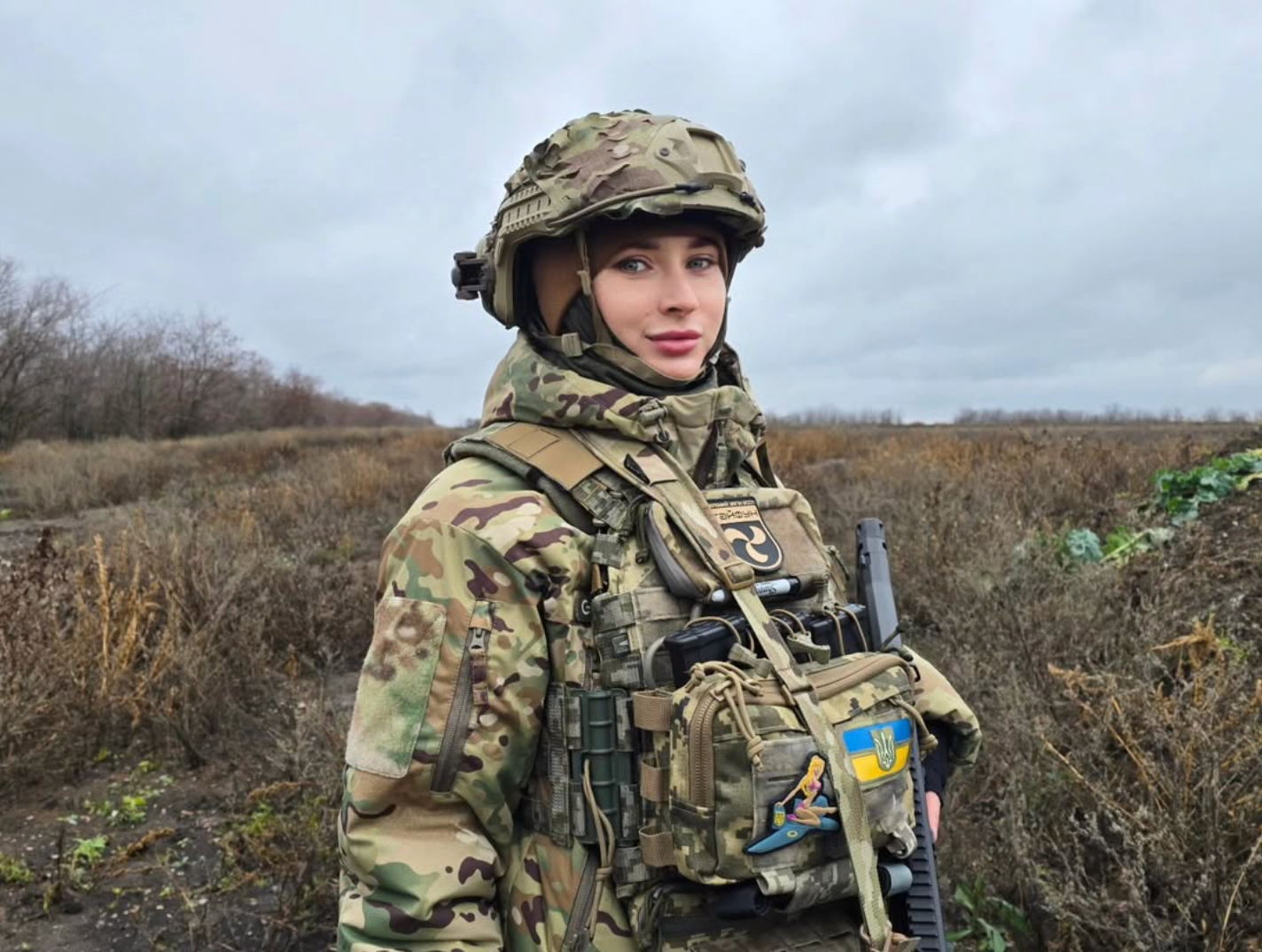
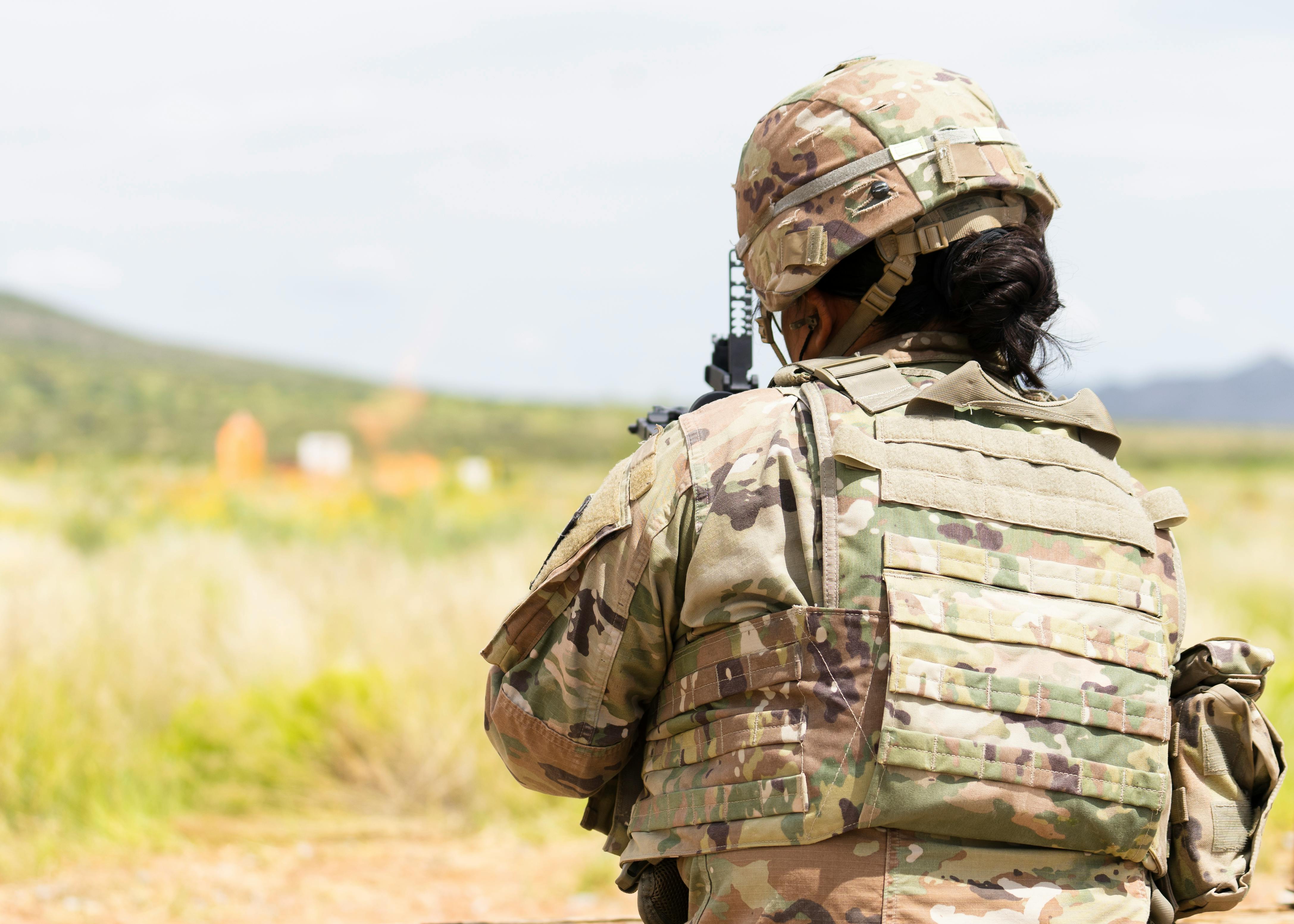
Built for female operational performance

Women in operational environments face unique physical demands, yet most military equipment systems are still designed around male anatomy.

Breast movement, pressure loading, restricted breathing, and prolonged discomfort can directly reduce performance, increase fatigue, and compromise operational effectiveness.

60%

British Army Recruits reported breast pain & problems caused by issued bras

35%

US Military Veterans suffer from migraines & nerve impingement damage (1 in 3)

38%

Female police officers reported crushed breasts caused by uniform & body armour (1 in 3)

85%

Female police officers reported at least one health condition caused by uniform

38%

Female police officers reported thrush (a fungal infection) caused by uniform (1 in 3)

26%

Female police officers reported UTIs caused by uniform (1 in 4)

21%

Female police officers reported skin conditions caused by uniform (1 in 5)

70%

Female Ukrainian servicewomen were issued body armour that does not fit

56%

Female Ukrainian servicewomen rated the body armour quality as low or very low

60%

British Army Recruits reported breast pain & problems caused by issued bras

35%

US Military Veterans suffer from migraines & nerve impingement damage (1 in 3)

38%

Female police officers reported crushed breasts caused by uniform & body armour (1 in 3)

85%

Female police officers reported at least one health condition caused by uniform

38%

Female police officers reported thrush (a fungal infection) caused by uniform (1 in 3)

26%

Female police officers reported UTIs caused by uniform (1 in 4)

21%

Female police officers reported skin conditions caused by uniform (1 in 5)

70%

Female Ukrainian servicewomen were issued body armour that does not fit

56%

Female Ukrainian servicewomen rated the body armour quality as low or very low

How We're Testing

Tigers Eye tests breast support as part of the operational system.

Lab

Biomehcanics Testing - Research Group in Breast Health

The Tigers Eye BSS has been tested by the world-leading experts at the Research Group in Breast Health. In laboratory testing, the BSS ranked first for both support and comfort, reducing breast movement by up to 74%.

Field

Operational Assessment – Active Duty US Marines

The BSS has been assessed in demanding military environments for durability, long-wear comfort, and compatibility with issued equipment, load carriage systems, and body armour during sustained activity.

Combat

Critical Environment Testing - Ukraine

Tigers Eye BSS products are currently being worn by frontline personnel operating in high-risk environments in Ukraine. Feedback from operational use directly informs ongoing product development and future system improvements.

Trials

Military & Police Trials

Tigers Eye BSS products are currently being worn by frontline personnel operating in high-risk environments in Ukraine. Feedback from operational use directly informs ongoing product development and future system improvements.

Background

Tiger’s Eye BSS products are currently being worn by frontline personnel operating in high-risk environments in Ukraine. Feedback from operational use directly informs ongoing product development and future system improvements.

Operational Demands

Soldiers wore the BSS through extended duty periods and deployments lasting from 12-hour shifts to continuous multi-day use in frontline conditions, often without being able to change or bathe. The BSS was utilised across a wide range of frontline roles including combat medical care, drone operations, and snipers.

These conditions required compatibility with body armour and performance under sustained load, repeated movement, limited ventilation, minimal recovery time, and prolonged alertness as well as sleep along defensive lines.

Observed Outcomes

Across frontline testing in Ukraine, the Tiger’s Eye Breast Support System (BSS) consistently demonstrated high levels of stability, operational wearability, and comfort during prolonged use. Users reported reduced physical awareness of the chest during movement, with the system remaining secure without the need for repeated adjustment.

Stable under body armour and load carriage without pinching or compression

100% of women surveyed preferred the Tigers Eye BSS over traditional bras and wanted it included as part of their operational equipment system

Improved compatibility with body armour and load-bearing equipment

No adjustment needed during extended shifts, reducing distraction in high-risk environments

Suitable for rest and sleep during operations without discomfort

Comfortable during prolonged wear with no chafing, digging in, or irritation

I wore [the BSS] for over 12 hours under armour, no pain, no adjusting. That’s never happened before; on the frontline, it matters more than people think.
Ukrainian Servicewoman
Protected Identity
When you’re moving fast or under stress, you don’t want to think about your body. For the first time, I don’t feel my chest when I move. It just disappears.
Ukrainian Servicewoman
Protected Identity
Usually, the ballistic vest presses in and everything shifts. With [the BSS], everything stays in place. It feels like part of my kit, not underwear.
Ukrainian Servicewoman
Protected Identity
x

Background

Women within the US Marine Corps function in highly demanding expeditionary environments where body armour and issued kit are predominantly designed around male anatomy. As a result, these Marines experience painful and distracting uneven pressure distribution across their shoulders, chest, and ribs during extended wear and physical activity. Our testing process explored how the BSS performed in US Marine Corps training and operational environments and across diverse physical requirements.

Operational Demands

Marines wore the BSS during extended training cycles and field exercises, including high-intensity conditioning, ruck marching, and tactical movement across varied global environments and climates. Conditions included repeated high-impact movement, prolonged exertion, restricted airflow from layered uniform wear, and limited recovery time, with some cases also including sleeping in the BSS in field conditions.

Results and Feedback

Across various environments, the BSS demonstrated superior continuous performance, support, and comfort during long-term wear. Feedback consistently highlighted reliable support during movement, reduced physical distraction, and strong compatibility with prolonged use.

See results and feedback below.

Reduced or eliminated friction or irritation during extended wear

Adjustable fit for different body types

Designed for long-term use across operational environments

Noticeably unparalleled support and comfort from the first use

Trusted for support during high-impact training and movement

"The Vault" consistently described as secure and confidence-boosting

Internal silicone grips provide extra support

Wear without adjusting during movement or under layers

Reduced breast and upper back discomfort during movement

Moisture control and quick drying

Absolutely love it. I’ve never seen anything like this design before. The support feels secure without being restrictive, even during long periods in kit and high-movement tasks. No irritation, no friction, no distractions. Once it’s on, you stop thinking about it, which is exactly what you want on duty.

Brie B.

Brie B.

US Marine Corps

The fit is excellent, especially for a broader build and wider back, which is something I usually struggle with. The Vault feels incredibly secure without restricting movement, and everything stays in place throughout active tasks and long hours in kit. It’s supportive, comfortable, and feels built for women working in demanding operational environments.

Vanessa H.

Vanessa H.

US Marine Corps

During long, high-intensity days where I’m constantly moving, the moisture-wicking and quick-drying performance stood out immediately. The Vault gave a secure feel and stayed flat under kit, which I can see being especially valuable during running and high-impact activity. The design has strong operational potential for women working long hours in demanding environments.

Samantha L.

Samantha L.

US Marine Corps

Designed to Increase Operational Efficiency

Without the BSS

With the BSS

Servicewomen commonly report issues with body armour including digging in, back pain, excessive chest compression, and restricted breathing. Our testing has shown these effects can be reduced by wearing the Tiger’s Eye BSS. Women reported reduced pain, improved comfort under kit, higher compliance with personal protective equipment (PPE), and greater overall satisfaction with body armour systems.

Biomechanics Testing

The Tigers Eye BSS has undergone rigorous laboratory testing at the world-leading Research Group in Breast Health (RGBH) facilities at the University of Portsmouth

Testing measured breast movement using motion sensor technology alongside wearer-reported comfort assessments. Within the test group, the Tiger’s Eye BSS was evaluated against leading sports bra brands and achieved the highest results for both support and comfort.

See the results below. See the results below.

Ranked 1st in Support & Comfort

Amongst top 80 sports bra brands tested at the RGBH in the same group

74% Reduction in overall Breast Movement

This certifies that the Tigers Eye BSS provides high-impact support

High User Satisfaction

Users reported no irritation at the straps, no pain, and feeling highly supported and comfortable

Expert Insight

Brogan Jones, Head of Testing at the RGBH, talks about the need for breast support for women serving in military roles, from a breast-movement perspective. She also summarises how the Tigers Eye BSS was tested, and some of its unique features.

What we're testing

Tigers Eye evaluates breast support as part of the equipment system - testing performance, integration and long-term impact under real operational conditions.

Armour Integration & Breast Compression

•⁠ ⁠Integration with body armour, load carriage systems, and protective clothing
•⁠ ⁠Reduction of breast compression and pressure caused by armour plates and carriers
•⁠ ⁠Strap and closure placement designed to reduce digging in, pressure points, and nerve irritation

Performance Under Load

•⁠ ⁠Stability during running, lifting, climbing, crawling, load carriage, and prolonged standing
•⁠ ⁠Reduced fatigue caused by unsupported breast movement
•⁠ ⁠Improved chest expansion and breathing without excessive compression
•⁠ ⁠Enhanced endurance, agility, and operational mobility

Long-Duration Wear

•⁠ ⁠Comfort and structural stability during extended shifts and operational tasks
•⁠ ⁠Performance during both static and dynamic activities, including patrol, prone work, and rest periods
•⁠ ⁠Management of heat, moisture, and chafing during prolonged use

Freedom of Movement

•⁠ ⁠Full range of motion across the shoulders, torso, and upper body
•⁠ ⁠Support during rapid movement without restriction
•⁠ ⁠Reduced compensatory movement patterns caused by discomfort or instability

Durability & Environmental Resistance

•⁠ ⁠Performance across heat, cold, moisture, and high-friction environments
•⁠ ⁠Resistance to sweat, dirt, abrasion, and repetitive movement
•⁠ ⁠Material resilience under demanding operational conditions

Hygiene & Skin Health

•⁠ ⁠Reduced chafing, rashes, and skin irritation under armour
•⁠ ⁠Moisture management and odour control during extended wear
•⁠ ⁠Addressing hygiene challenges across military, policing, and frontline operational environments

Explore Existing Research

‘When I went for a fitting, I was told I was too fat for a stab vest, so I didn’t have one for seven years’: uniforms, (un)belonging and women’s bodies in policing.

De Camargo, C. R

Policing and Society, Taylor & Francis

Feb 2026

This article examines the lived experiences of female police officers in relation to uniform provision, particularly body armour, in England and Wales. Using Interpretative Phenomenological Analysis (IPA), the study draws on interviews and focus groups with 88 women across five police forces in 2023–2024 to explore how the police uniform fails to accommodate women’s bodies, resulting in pain, discomfort, and restricted movement – especially for those with larger breasts or bodies. Officers described being unable to breathe, suffering long-term back issues, and feeling shamed for requesting refits. Access to better-fitting equipment was inconsistent and often role-dependent, fuelling perceptions of unfairness and exclusion. This study focuses specifically on the institutional infrastructures that govern body-armour provision, including procurement processes, fitting protocols, and role-based access to PPE and discusses recommendations for establishing minimum standards, reintroducing fitting infrastructures and strengthening accountability in procurement.

Read full study

National Uniform & Equipment Survey

De Camargo, C.; Wallace, S.; Fairclough, L.; Khan, S.; Mader, Z.; Goodwin, B.; Sha, Y.

Lancaster University, Police Federation, NPCC,

July 2025

This report presents the key findings of the 2024 National Uniform & Equipment Survey, which collated over 20,000 responses from officers and staff who wear the police uniform as part of their everyday role. Overall sentiment towards the uniform is negative, with common descriptors including ‘unfit for purpose’ and ‘ill-fitting’. Moreover, the uniform is widely regarded as unsuited to the specific functional requirements of police officer and staff duties. Critically, whether engaged in physically demanding tasks or sedentary work, respondents consistently report a sense of restriction and persistent discomfort - conditions that have become a routine aspect of their working day. As a result, many state a variety of physical health conditions they attribute to wearing the uniform. While some officers and staff report feeling professional when wearing the uniform, they do not perceive it as visually smart or reflective of pride in the organisation.

Read full study

Effect of Torso and Breast Characteristics on the Perceived Fit of Body Armour Systems Among Female Soldiers: Implications for Body Armour Sizing and Design

Coltman CE, Brisbine BR, Molloy RH, Steele JR.

Front Sports Act Living

March 2022

This study aimed to provide normative data characterising the torsos and breasts of female soldiers and to determine which torso and breast anthropometric measurements contributed to reports of poor body armour fit. Ninety-seven female Australian Army soldiers completed a questionnaire about their experience with current-issue body armour, including perceptions of fit. Participants also attended a single testing session where we took a three-dimensional scan of their breasts and torso and collected several anthropometric measurements to characterise their torso size and shape. Sixteen of the 22 breast and torso measurements collected were significantly related to the perceived fit of current-issue body armour systems. To improve perceptions of fit for female soldiers and, in turn, reduce movement interference, discomfort, and barriers to occupational performance, future body armour systems should cater to the wide range of female breast and torso shapes and sizes.

Read full study

Bra-body armour integration, breast discomfort and breast injury associated with wearing body armour

Coltman, C. E., Brisbine, B. R., & Steele, J. R.

Taylor & Francis

28 July 2021

This study investigated whether female soldiers experience bra integration or breast discomfort/injuries related to body armour use and whether these issues were associated with breast size. Ninety-seven Australian Defence Force female soldiers completed a questionnaire and had their breast volume assessed (range: 91–919 ml/breast) using three-dimensional scanning. Twenty-two percent (n = 21) of participants reported integration issues between their bra and body armour, 63% (n = 61) reported breast discomfort while wearing body armour and 27% (n = 26) reported experiencing a breast injury related to wearing body armour. Although bra-body armour integration was not dependent upon breast size, female soldiers with medium-large breasts reported significantly more breast discomfort and injuries when using body armour compared to participants with small breasts. These findings highlight the importance of developing body armour systems that cater to the range of breast sizes of female soldiers in order to improve bra-body armour integration and reduce breast discomfort and injury.

Read full study

Identifying problems that female soldiers experience with current-issue body armour

Coltman CE, Brisbine BR, Molloy RH, Ball NB, Spratford WA, Steele JR.

Applied Ergonomics, Elsevier Ltd.

July 2021

Despite female soldiers representing a growing user population, military body armour systems are currently better suited to the anthropometric dimensions of male soldiers. The aim of this study was to explore issues that female soldiers experience with current Australian Defence Force (ADF)-issue body armour. Following a sequential exploratory design, an initial questionnaire was completed by 97 Australian female soldiers. Subsequently, 33 Australian female soldiers participated in one of three focus groups. Descriptive statistics of questionnaire data considered alongside thematic analysis of focus group transcripts revealed problems with the design (fit, form and function) of current ADF-issue body armour, as well as problems with the issuance and education surrounding use of the system. It is recommended that anthropometric data of female soldiers be better incorporated into future body armour designs, that these data inform processes surrounding both acquisition and issuance of body armour and that training protocols for body armour use be reviewed.

Read full study

Establishing Suitable Bra Characteristics for Tactical Athletes: A Mixed-Method Multi-Study Approach

Paines, E., Milligan, G., Tipton, M.et al.

Sports Med

15 December 2025

A professional sports bra fitting and issue service was introduced for women entering British Army basic training (BT) in 2020 to address breast health and bra-related issues. However, the suitability of commercial off-the-shelf sports bras for female tactical athletes, designed primarily for short-duration use, remains unclear. We aimed to develop evidence-based recommendations to inform British Army sports bra policy and establish a framework applicable to other female tactical athlete populations. Despite implementing a bra fitting and issue service, 61% of recruits still reported at least one breast or bra-related issue. None of the four sports bra designs tested fully met the varied demands of BT tasks. Ten key bra design characteristics (e.g. strap configuration, ease of use, support level) were identified across five different BT tasks (physical training, field exercise, military tasks, foot drill and classroom sessions), combining insights from short-duration laboratory simulations and long-duration field use.

Read full study

The effect of underwired and sports bras on breast shape, key anthropometric dimensions, and body armour comfort

Malbon, C., Knock, C., Critchley, R., & Carr, D. J.

SAGE Publications Ltd.

23 April 2021

This study follows on previous research which investigated the comfort and types of bras worn by UK female police officers when wearing body armour and performing typical activities. This controlled study involved a cohort of 31 female police officers and investigated three main areas. Firstly the effect of professional bra fitting on size and comfort, secondly the effect of wearing an underwired bra or a sports bra on comfort and ability to perform certain actions, and thirdly the effect of an underwired bra and sports bra on key anthropometric data in relation to the fitting of body armour.

Read full study

Can smaller body armour improve thoracolumbar range of motion and reduce interference when female soldiers perform dynamic tasks?

Celeste E. Coltman, Brooke R. Brisbine, Richard H. Molloy, Julie R. Steele,

Applied Ergonomics, Elsevier Ltd.

January 2022

Most female soldiers report that in-service body armour systems are too large. We investigated whether a smaller prototype body armour system could improve thoracolumbar range of motion (ROM) and reduce interference when female soldiers performed dynamic postures. 97 female soldiers completed three ROM tasks and seven dynamic postures wearing no armour, an in-service body armour system, and a smaller prototype system. Feedback on comfort of the prototype system was also obtained. Thoracolumbar ROM and dynamic posture completion were both hindered by using body armour, although the participants’ performances were significantly less impeded when they wore the smaller prototype system compared to the in-service system. A smaller body armour system that is better matched to the anthropometric dimensions of female soldiers appears to improve overall fit and function. An increased range of body armour sizes and female-specific designs should be systematically explored to further enhance fit and function of body armour.

Read full study

Clothing and individual equipment for the female soldier: developing a framework to improve the evidence base which informs future design and evaluation

Armstrong NC, Rodrigues SA, Gruevski KM, Mitchell KB, Fogarty A, Saunders S, Bossi L.

BMJ Mil Health

28 August 2024

The development of inclusive equipment and clothing is a priority across national defence departments that are part of The Technical Cooperation Programme. As such, a collaborative effort has been established to inform the development of clothing and equipment for women. This invited review provides an overview of an ongoing collaborative project presented at the sixth International Congress on Soldiers Physical Performance. The purpose of this review was to summarise the outputs of scoping work conducted to inform the direction of future research programmes. The scoping work has recommended a framework, which includes improved objective metrics for assessment, standardised methods to characterise study participants and improved methods for characterising the system being evaluated. The longer-term research project aims to implement the framework so that the design of future equipment and clothing is optimised for all end users.

Read full study

The effects of body armour and load carriage on respiratory function and physical performance during a simulated military task in male and female soldiers

Armstrong, N.; Risius, D.; Wardle, S.; Greeves, J.; House, J.R

Defence Science and Technology Laboratory, Ministry of Defence

17 November 2017

This study investigated the effect of wearing body armour and varying loads on respiratory function and physical performance during prolonged marching in male and female soldiers. Methods: Twelve male and ten female soldiers completed four 12.25 km treadmill marches with different loads (21, 26, 33, 43 kg) and a 2.4 km best time test with 26 kg. Respiratory mechanics, gait, and movement were measured before, during, and after. Results: Only 50% of men and 10% of women completed all conditions; discomfort was the main limiting factor. Women carried a higher percentage of lean body mass (44–93% vs 36–74%), marched at higher %V̇O2max, and had greater breathing frequency. Load caused restrictive ventilatory impairment in both sexes, and inspiratory/expiratory muscle fatigue occurred within 50 min. Time for the best effort test was unaffected.

Read full study

The effect of operational equipment and bra type interaction on breast biomechanics in female police officers

Canty, B.; Burbage, J.; Mulloy, F.

International Society of Biomechanics in Sports

July 2024

The purpose of this study was to explore the interaction of different bra types with personal protective equipment (PPE) in female police officers. Breast motion of 13 officers was captured in jogging under different bra support conditions. Displacement of breast tissue locations was recorded and compared. The high support condition significantly reduced breast motion. PPE also reduced breast movement, suggesting increased compression from body armour and tactical vest. Results suggest officers should consider a high‑support sports bra during work shifts and that performance may be compromised by breast support and equipment interaction

Read full study

The effect of breast size and bra type on comfort for UK female police officers wearing body armour

Malbon C, Knock DC, Critchley DR, Debra J Carr P.

Applied Ergonomics, Elsevier Ltd.

5 December 2019

Within the Police service of England and Wales the wearing of ballistic and stab resistant body armour is common, with most police forces mandating its usage when away from the police station. Of all the serving police officers in England and Wales 29.1% are female (Hargreaves et al., 2017). A survey was developed and then distributed by the Police Federation of England and Wales to all servicing police officers up to the rank of Inspector. The survey returned 2633 responses after cleaning of the data. From the responses it was seen that the predominant bra type worn is underwired (71%) and the predominant UK bra size is 34B (9%). It was also determined that the predominant areas where the body armour either rubbed or caused discomfort were the left and right anterior mammary regions and the posterior lateral sacral region. By understanding the distribution of bra size, type of bra worn and areas of discomfort or rubbing it helps further understand the issues faced by female police officers and how body armour design could be improved.

Read full study

The incidence of breast health issues and the efficacy of a sports bra fit and issue service in British Army recruits

Burbage, J., Rawcliffe, A. J., Saunders, S., Corfield, L., & Izard, R.

Taylor & Francis

12 March 2021

Increasing retention of female recruits throughout Basic Training (BT) is a key priority for the British Army. The aims of this study were two-fold; (i) quantify breast health issues and sports bra usage within female British Army recruits, and (ii) assess the influence of professionally fitted sports bras on breast health and bra fit issues across 13 weeks of BT. A survey was completed by 246 female recruits that identified the incidence of breast health issues during BT. Subsequently, 33 female recruits were provided with professionally fitted sports bras during Week-1 of BT. Recruits completed a survey in Week-1 (Pre) and Week-13 (Post). There was a high incidence of bra issues during BT, which did not reduce following the implementation of professionally fitted sports bras. The authors recommend further research into the specific functional requirements of breast support relative to the demands of BT and the needs of the female recruit.

Read full study